Offline Mode — Browsing cached scripture & knowledge graph
Found 36 topics & entities and 4 verses in 1815ms • Auto-routed to All Matches (Hybrid)
Gallio Delphi Inscription (Interactive 3D Epigraphic Inscription • Acts 18:12–17 ): Fragmentary Greek letter of Emperor Claudius at Delphi naming Proconsul L. Junius Gallio, providing the absolute chronological anchor for Paul's Corinthian ministry. Within the broader Biblical Knowledge Graph, this connects directly to Early Church, Acts & Pauline Epistles—Following the ascension of Yeshua and the outpouring of the Holy Spirit at Pentecost in Acts 1 –2, the apostolic community spread from Jerusalem and Judea to Samaria , Antioch , Corinth , Ephesus , and Rome , documented across Acts and the twenty-one New Testament Epistles.
Biblical Geography & Sacred Architecture
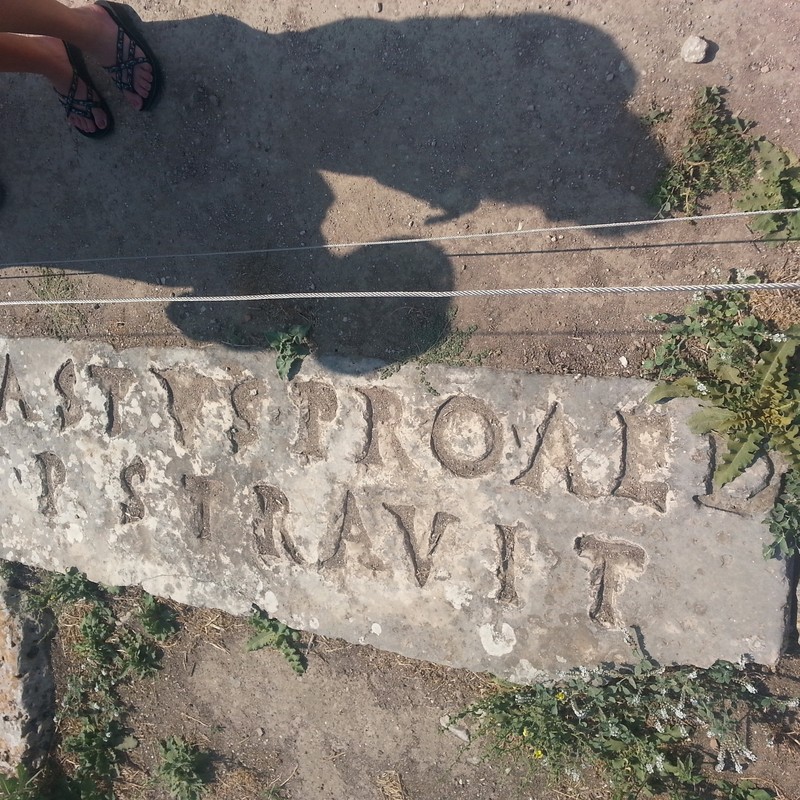
3D Sanctuary Reconstructions: Gallio Delphi Inscription — Fragmentary Greek letter of Emperor Claudius at Delphi naming Proconsul L. Junius Gallio, providing the absolute chronological anchor for Paul's Corinthian ministry. Erastus Inscription at Corinth — Latin limestone pavement inscription near the Corinth theater reading 'ERASTVS PRO AEDILITATE S P STRAVIT' (Erastus in return for his aedileship laid this pavement at his own expense).
Scripture Witness (KJV) & Canonical Context
Primary KJV scripture witnesses include Acts 18:12 : "And when Gallio was the deputy of Achaia , the Jews made insurrection with one accord against Paul, and brought him to the judgment seat,"; Acts 18:17 : "Then all the Greeks took Sosthenes, the chief ruler of the synagogue, and beat him before the judgment seat. And Gallio cared for none of those things."; Acts 18:14 : "And when Paul was now about to open his mouth, Gallio said unto the Jews, If it were a matter of wrong or wicked lewdness, O ye Jews, reason would that I should bear with you:".
Topics, People & Places
(36)
Stone rescript of Emperor Claudius at Delphi fixing the proconsulship of Gallio and anchoring Paul's chronology
Nine limestone fragments of an imperial letter from Emperor Claudius to the city of Delphi, citing recommendations made by 'Lucius Junius Gallio, my friend and proconsul of Achaia '.
Late 8th-century BC monumental Paleo-Hebrew inscription recording the excavation of Hezekiah's water tunnel
A six-line Paleo-Hebrew inscription carved into the rock wall near the southern exit of the 533-meter subterranean conduit diverting water from the Gihon Spring to the Pool of Siloam .
1st-century AD limestone plaza pavement carved by Erastus, civic commissioner of public works (aedile)
A large paved limestone plaza north of the Corinthian theater containing a deep Latin inscription inlaid with metal letters, commemorating an aedile named Erastus who paved the plaza at his own expense.
Herodian Greek limestone slab warning Gentiles against entering the inner sacred courts on pain of death
A complete limestone warning slab that was affixed to the balustrade (Soreg) separating the Court of the Gentiles from the sanctified inner courts of Herod's Temple Mount.
8th-century BC plaster wall inscription explicitly recording the prophecies of 'Balaam son of Beor, the seer of the gods'
Fragmentary red and black ink inscriptions painted on wall plaster in an enigmatic Northwest Semitic dialect, recounting apocalyptic nocturnal visions given by the Shaddayin deities to Balaam son of Beor.
Roman-period arch inscription from Thessalonica verifying the rare civic magistrate title 'politarch' used in Acts 17:6
A carved marble lintel from the western triumphal gate of Thessalonica honoring the city's civic magistrates, confirming the historical accuracy of Luke 's unique terminology.
Herodian Hebrew cornerstone from the southwest pinnacle of the Temple Mount for Sabbath trumpet announcements
A large ashlar stone thrown down from the southwest parapet of the Temple Mount during the Roman destruction of 70 AD, bearing a Hebrew inscription demarcating the priest's station for blowing the silver trumpets.
9th-century BC Aramaic victory monument explicitly attesting the Davidic Dynasty ('bytdwd')
Three basalt fragments of an Aramean triumphal inscription erected by King Hazael of Aram - Damascus , boasting of slaying Joram of Israel and Ahaziah of the ' House of David ' (bytdwd).
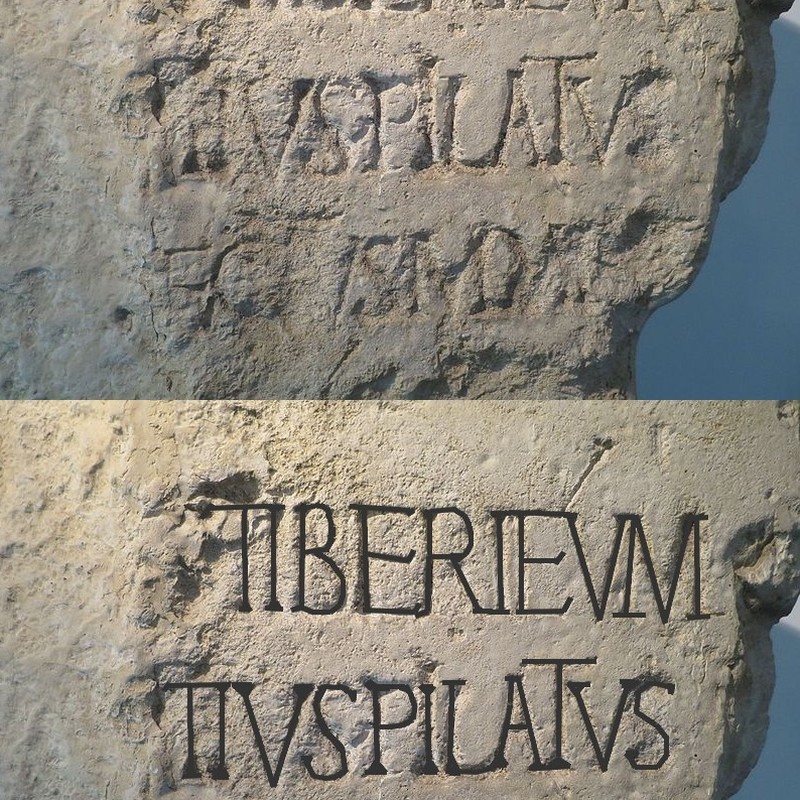
1st-century AD monumental Latin inscription confirming Pontius Pilate as Prefect of Judea ('Praefectus Iudaeae')
A carved limestone block reused as a theater step, preserving four lines of Latin dedicating a public building (Tiberieum) to the honor of Emperor Tiberius by 'Pontius Pilatus, Praefectus Iudaeae'.
Early 6th-century BC clay seal impression belonging to Gedaliah the prime minister / governor of Judah
A clay seal impression found in the Level II destruction debris of Lachish bearing the inscription 'Belonging to Gedaliah who is over the house' (lgdlyhw 'sr 'l hbyt).
Late 6th-century BC monumental cliff relief of Darius I that served as the decipherment key for cuneiform scripts
A massive rock relief carved 100 meters up a limestone cliff detailing King Darius the Great's victory over the rebel Gaumata and nine rival claimants, written in Old Persian, Elamite, and Babylonian cuneiform.
196 BC Ptolemaic granodiorite trilingual decree that unlocked ancient Egyptian hieroglyphic script for modern historiography
A 1.12-meter granodiorite slab bearing a priestly decree in three scripts (Hieroglyphic, Demotic, and Ancient Greek), deciphered by Jean-François Champollion in 1822 to open the entire corpus of Egyptian biblical archaeology.
Neo-Assyrian basalt monument featuring the earliest surviving pictorial representation of an Israelite monarch (Jehu)
A 1.98-meter black limestone obelisk depicting relief panels of five conquered regions presenting tribute, including King Jehu of Israel prostrating himself before Shalmaneser III.
Chalk limestone ossuary inscribed 'James, son of Joseph, brother of Jesus' with contested epigraphic authenticity
A 50.5 cm Jewish burial bone box bearing an Aramaic inscription reading 'Ya'akov bar Yosef akhui diYeshua' ( James , son of Joseph , brother of Jesus ), which provoked intense legal and archaeological controversy.
7th-century BC tiny rolled silver plaques preserving the oldest surviving citation of biblical scripture (Priestly Blessing)
Two miniature rolled silver amulets (KH1 and KH2) discovered in an unlooted burial repository beneath St. Andrew's Church in Jerusalem , unrolled in 1980 to reveal microscopic Paleo-Hebrew text.
Neo-Assyrian cuneiform stele documenting the 853 BC Battle of Qarqar and Ahab the Israelite
A 2.2-meter rounded limestone stele containing an annalistic account of the western campaigns of Shalmaneser III, culminating in the titanic Battle of Qarqar against a twelve-king anti-Assyrian coalition.
1st-century AD Greek inscriptions from Soli and Paphos confirming Quintus Sergius Paullus as Proconsul of Cyprus
Epigraphic stone inscriptions naming Lucius or Quintus Sergius Paullus as proconsul (anthypatos) of Cyprus during the reign of Claudius, verifying Luke 's administrative accuracy in Acts 13 .
Wiki Article • New Testament & Messiah
Following the ascension of Yeshua and the outpouring of the Holy Spirit at Pentecost in Acts 1 –2, the apostolic community spread from Jerusalem and Judea to Samaria , Antioch , Corinth , Ephesus , and Rome , documented across Acts and the twenty-one New Testament Epistles.
Epigraphic evidence of the indigenous Lycaonian language and paired worship of Zeus and Hermes
Stone inscriptions discovered near the mound of Lystra dedicated to 'Zeus and Hermes' together by local priests, proving the indigenous paired cult documented in Acts 14 .
9th-century BC royal Moabite monument mentioning Omri King of Israel and the Tetragrammaton (YHWH)
A 1.24-meter black basalt stele inscribed in the Moabite dialect of Northwest Semitic by King Mesha of Moab , recounting his rebellion against Israelite domination and restoring territories captured during the reign of Omri.
Marble tablet containing an imperial decree prescribing capital punishment for moving sepulcher stones or disturbing graves
A 60 cm Greek marble inscription recording an imperial rescript (Diatagma Kaisaros) mandating the death penalty for anyone who forcibly removes stones from tombs or extracts corpses with malicious intent.
1st-century AD sheet of pure engraved copper listing 64 subterranean treasure caches of the Jerusalem Temple
Two rolled sheets of 99% pure copper found oxidized and brittle in Cave 3, cut into strips in Manchester in 1956 to reveal 12 columns of Mishnaic Hebrew listing colossal hidden quantities of gold, silver, tithe vessels, and priestly vestments.
faith, belief, trust
Primary meaning: faith, belief, trust, confidence. Strong's: persuasion, i.e. credence; moral conviction (of religious truth, or the truthfulness of God or a religious teacher), especially reliance upon Christ for salvation; abstractly, constancy in such profession; by extension, the system of religious (Gospel) truth itself. Lexical nuances: in active sense, faith , belief , trust , confidence , in NT always of religious faith in God or Christ or spiritual things: Mt 8:10 , Lk 5:20 , Ac 14:9 , Ro 1:8 , I Co 2:5 , II Co 1:24 , I Ti 1:5 , al.; c. gen. obj., Mk 11:22 , Ac 3:16 , Ro 3:22 , Ga 2:16 , Eph 3:12 , Ja 2:1 , al.; c. prep., ἐν , Ro 3:25 , Ga 3:26 , Eph 1:15 , Col 1:24 , I Ti 1:14 3:13 , II Ti 1:13 3:15 , II Pe 1:1 ; εἰς , Ac ...
Derivation: from G3982 (πείθω);
Cuneiform foundation cylinders of the last king of Babylon explicitly naming Belshazzar his eldest son
Large clay foundation cylinders excavated from temple ruins at Sippar and Ur in which King Nabonidus describes restoring sanctuaries and offers prayers for his eldest son, Crown Prince Belshazzar.
18th-century BC Old Babylonian legal code monument paralleling biblical civil case law structures
A 2.25-meter black diorite stele engraved with 282 legal statutes in Akkadian cuneiform beneath a relief depicting Hammurabi receiving the royal insignia of justice from the sun god Shamash.
Scripture Passages (4)
And when Gallio was the deputy of Achaia , the Jews made insurrection with one accord against Paul, and brought him to the judgment seat,
Then all the Greeks took Sosthenes, the chief ruler of the synagogue, and beat him before the judgment seat. And Gallio cared for none of those things.
And when Paul was now about to open his mouth, Gallio said unto the Jews, If it were a matter of wrong or wicked lewdness, O ye Jews, reason would that I should bear with you:
For as I passed by, and beheld your devotions, I found an altar with this inscription, TO THE UNKNOWN GOD. Whom therefore ye ignorantly worship, him declare I unto you.