1
Literal Translation / Primary Inscription
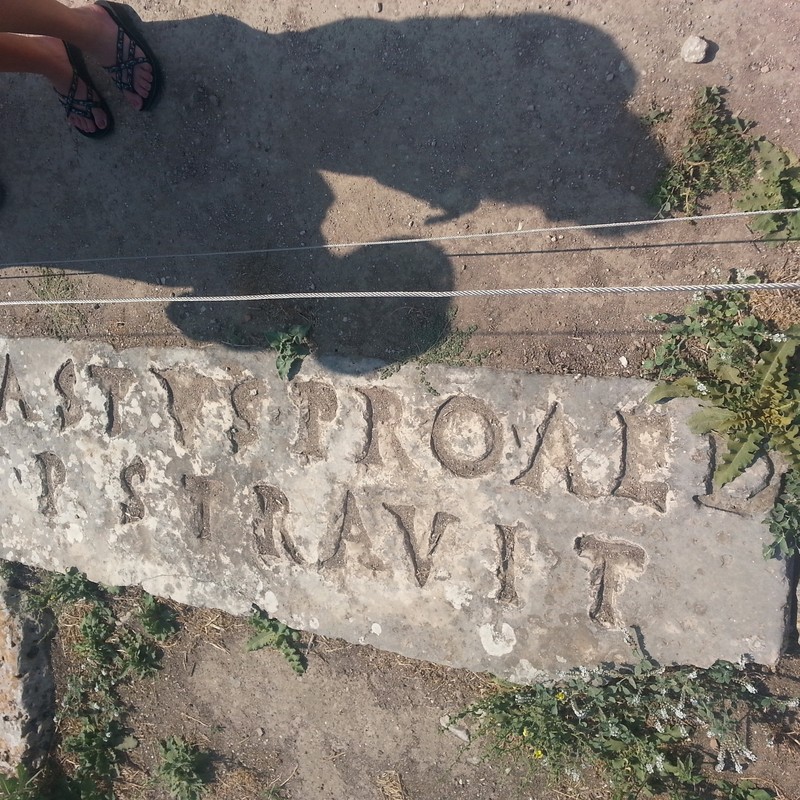
Epigraphic RecordThe Latin inscription reads: 'ERASTVS PRO AEDILITATE S P STRAVIT' (Erastus, in return for his aedileship, paved this at his own expense).
1st-century AD limestone plaza pavement carved by Erastus, civic commissioner of public works (aedile)
A large paved limestone plaza north of the Corinthian theater containing a deep Latin inscription inlaid with metal letters, commemorating an aedile named Erastus who paved the plaza at his own expense.
Rigorous 4-part empirical analysis separating ancient text from bias and consensus
The Latin inscription reads: 'ERASTVS PRO AEDILITATE S P STRAVIT' (Erastus, in return for his aedileship, paved this at his own expense).
Corroborates Romans 16:23 ('Erastus, the city treasurer [oikonomos], greets you') written by Paul from Corinth, as well as Erastus in Acts 19:22 and 2 Timothy 4:20 ('Erastus remained at Corinth').
Scholars debate whether the Greek civic office 'oikonomos' (financial manager/treasurer) was Paul's Greek rendering of the Latin municipal office 'aedilis' (commissioner of public works and finance).
Civic benefaction monument recording private aristocratic expenditure to fulfill civic election promises.