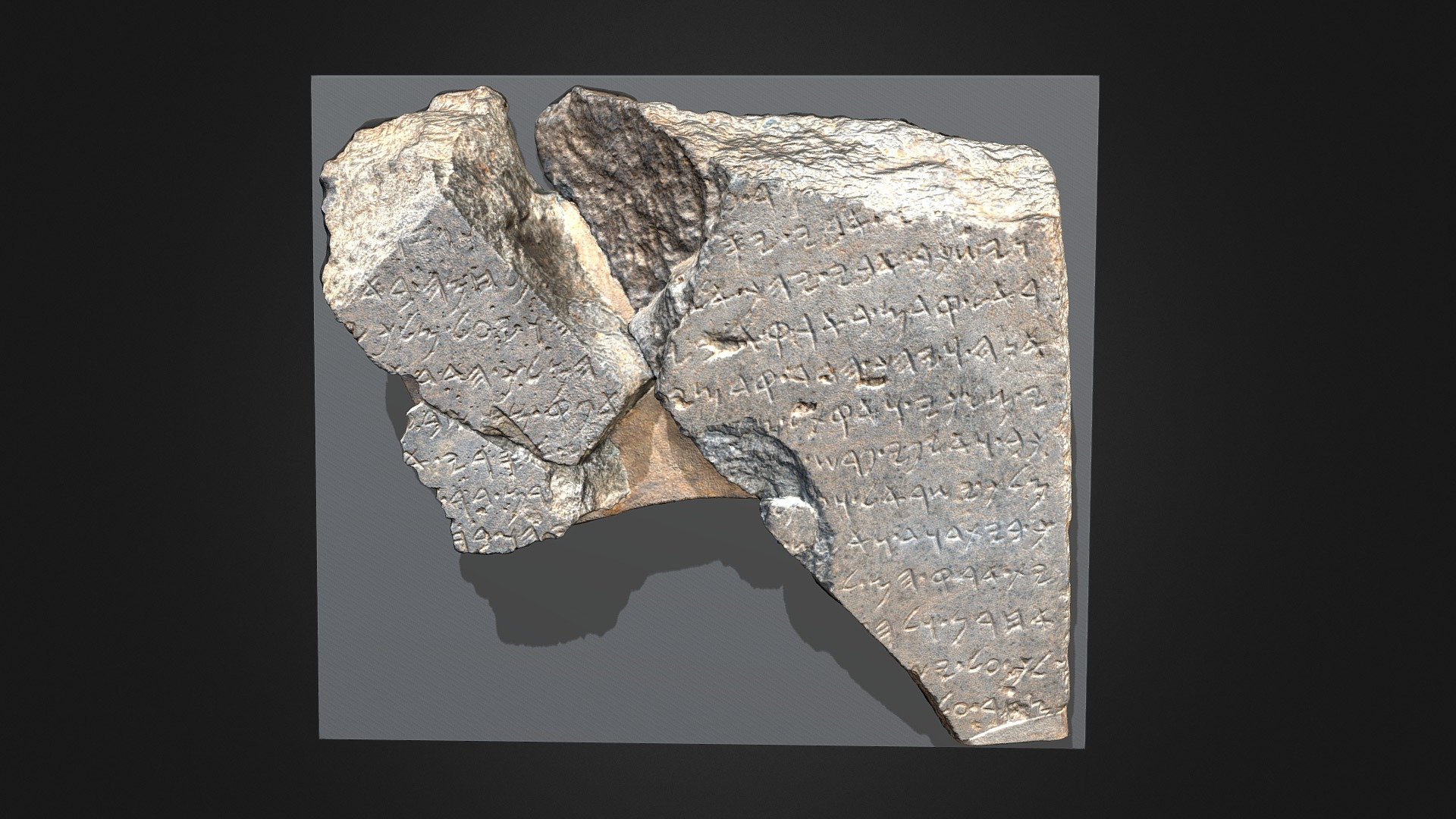
9th-century BC Aramaic victory monument explicitly attesting the Davidic Dynasty ('bytdwd')
T1Direct Archaeological Attestation98%
c. 840–830 BC (Reign of Hazael)
Discovery Excavation:Tel Dan, Upper Galilee, Israel (Avraham Biran, 1993–1994)
Current Museum / Accession:Israel Museum, Jerusalem (IAA 1994-326)
Three basalt fragments of an Aramean triumphal inscription erected by King Hazael of Aram-Damascus, boasting of slaying Joram of Israel and Ahaziah of the 'House of David' (bytdwd).
Corroboration Distribution for Connected Passages (17 records)
94% Confidence
17 sources
88.24%
Direct Archaeology15(88.24%)
Ancient Historians0(0%)
Dead Sea Scrolls & Manuscripts1(5.88%)
Scholarly Consensus1(5.88%)
Debated & Traditional0(0%)
Claim-by-Claim Epistemic Verification Breakdown
Rigorous 4-part empirical analysis separating ancient text from bias and consensus
1
Literal Translation / Primary Inscription
Epigraphic Record
Fragment A/B lines 7–9 read: '[I killed Jora]m son of [Ahab] king of Israel, and [I] killed [Ahazia]hu son of [Jehoram kin]g of the House of David (bytdwd), and I set [their towns into ruins...].'
2
Biblical Corroboration & Cross-References
Scriptural Harmony
Directly corroborates the historical existence of the Davidic dynasty ('House of David') as a recognized geopolitical entity, and the synchronism between King Joram of Israel and King Ahaziah of Judah in 2 Kings 8:28–29 and 9:24–27.
Scholarly Debate, Historiography & Modern Consensus
Critical Nuance
Scholars universally accept 'bytdwd' as House of David following Biran and Naveh (1993); fringe minimalist readings proposing 'house of the beloved' or a toponym have been thoroughly rejected by Northwest Semitic epigraphers.
4
Ancient Author Bias, Royal Propaganda & Perspective
Ideological Context
Hazael credits himself with killing Joram and Ahaziah, whereas 2 Kings 9 recounts that Jehu executed both in a bloody domestic military coup. Hazael likely claimed credit for the outcome of the war he initiated.