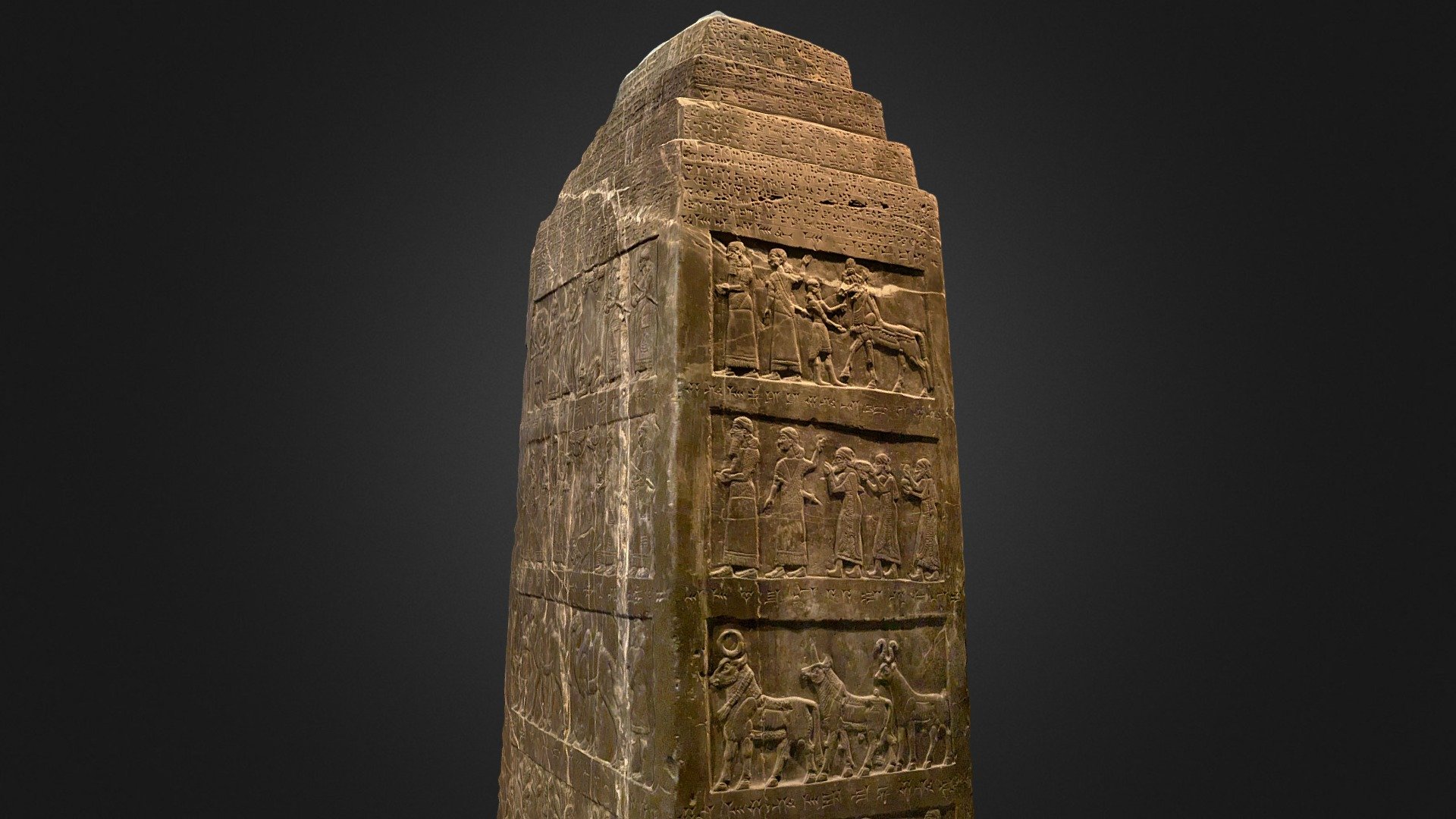
Neo-Assyrian basalt monument featuring the earliest surviving pictorial representation of an Israelite monarch (Jehu)
T1Direct Archaeological Attestation98%
c. 825 BC (Campaign of 841 BC)
Discovery Excavation:Nimrud (biblical Calah), Iraq (Austen Henry Layard, 1846)
Current Museum / Accession:British Museum, London (BM 118885)
A 1.98-meter black limestone obelisk depicting relief panels of five conquered regions presenting tribute, including King Jehu of Israel prostrating himself before Shalmaneser III.
Corroboration Distribution for Connected Passages (17 records)
94% Confidence
17 sources
88.24%
Direct Archaeology15(88.24%)
Ancient Historians0(0%)
Dead Sea Scrolls & Manuscripts1(5.88%)
Scholarly Consensus1(5.88%)
Debated & Traditional0(0%)
Claim-by-Claim Epistemic Verification Breakdown
Rigorous 4-part empirical analysis separating ancient text from bias and consensus
1
Literal Translation / Primary Inscription
Epigraphic Record
The cuneiform epigraph above the second register reads: 'Tribute of Ia-u-a mar Hu-um-ri-i (Jehu son of Omri): silver, gold, a golden bowl, a golden tureen, golden goblets, golden buckets, tin, a royal staff, and spear shafts I received from him.'
2
Biblical Corroboration & Cross-References
Scriptural Harmony
Corroborates King Jehu of Israel (`2KI.9–10`) and illustrates Israel's submission to Assyria following Jehu's overthrow of the Omride dynasty in 841 BC.
Scholarly Debate, Historiography & Modern Consensus
Critical Nuance
Scholars note that the Assyrians designated the northern kingdom 'Bit-Humri' (House of Omri), meaning 'son of Omri' functioned as an official dynastic or territorial title rather than biological sonship.
4
Ancient Author Bias, Royal Propaganda & Perspective
Ideological Context
Depicts Jehu in total subjugation with his face to the ground before Shalmaneser III to magnify Assyrian majesty and divine sanction under Ashur.