Knowledge Graph Scripture & Encyclopedia

Search & Explore

Multimedia Filter:
Suggested topics:
Found 36 topics & entities and 0 verses in 4883ms • Auto-routed to All Matches (Hybrid)
Topic Overview

Code of Hammurabi Stele

Code of Hammurabi Stele (Interactive 3D Legal Monument • Exodus 21:1–25 ): Monumental black diorite stele containing 282 legal judgments of King Hammurabi of Babylon , displaying profound thematic and legal parallels with biblical Mosaic law. Within the broader Biblical Knowledge Graph, this connects directly to The Exodus & Mount Sinai —Raised in Pharaoh's court and called at the burning bush on Horeb , Moses and his brother Aaron lead Israel out of bondage in Egypt through the Passover and crossing of the Red Sea to receive the Covenant Law at Mount Sinai.

Biblical Geography & Sacred Architecture

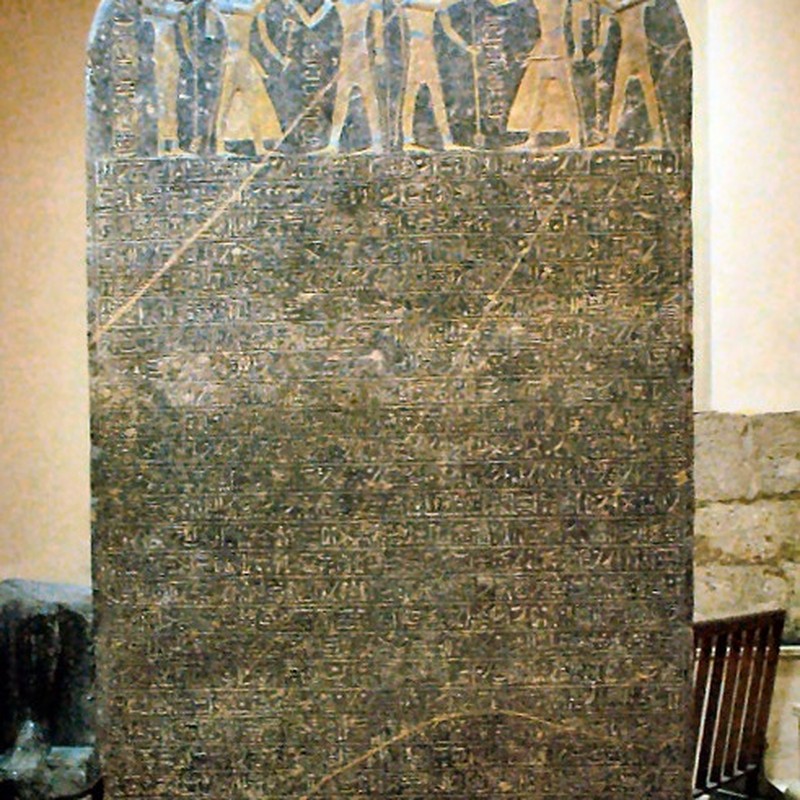
3D Sanctuary Reconstructions: Code of Hammurabi Stele — Monumental black diorite stele containing 282 legal judgments of King Hammurabi of Babylon , displaying profound thematic and legal parallels with biblical Mosaic law. Merneptah Stele ( Israel Stele ) — Monumental black granite commemorative stela of Pharaoh Merneptah recording military campaigns in Canaan and containing the earliest extra-biblical mention of Israel .

Connected Topics & Entities Book/Chapter Verse Person Place Lexicon Theology Commentary History Perspective

Topics, People & Places (36)

Code of Hammurabi Stele 3D & AR
Interactive 3D Legal Monument • Exodus 21:1–25

Monumental black diorite stele containing 282 legal judgments of King Hammurabi of Babylon , displaying profound thematic and legal parallels with biblical Mosaic law.

Code of Hammurabi Stele
99% scholarly_consensus
18th-century BC Old Babylonian legal code monument paralleling biblical civil case law structures

A 2.25-meter black diorite stele engraved with 282 legal statutes in Akkadian cuneiform beneath a relief depicting Hammurabi receiving the royal insignia of justice from the sun god Shamash.

Code of Hammurabi Stele — Babylonian Law & Mosaic Parallels
IMAGE • archaeology

Diorite stele in the Louvre Museum with 282 legal statutes illustrating Ancient Near Eastern covenantal jurisprudence.

Old Babylonian Royal Sculptors of King Hammurabi (c. 1750 BCE) • Musée du Louvre, Paris (Sb 8) CC-BY-SA 4.0
Code of Hammurabi Shamash Relief
IMAGE • archaeology

Black diorite stela summit relief depicting King Hammurabi receiving laws and royal scepter from sun-god Shamash.

Curators & Archaeologists of Louvre Museum • Louvre Museum / Wikimedia Commons Public Domain Mark 1.0
Merneptah Stele (Israel Stele) 3D & AR
Interactive 3D Granite Stele • Judges 1:1

Monumental black granite commemorative stela of Pharaoh Merneptah recording military campaigns in Canaan and containing the earliest extra-biblical mention of Israel .

Merneptah Stele (Israel Stele)
99% direct_archaeological
Late 13th-century BC Egyptian victory monument containing the earliest extra-biblical mention of 'Israel'

A 3.18-meter black granite commemorative stela of Pharaoh Merneptah detailing military campaigns in Libya and Canaan , concluding with a poetic victory song that lists conquered peoples including Ashkelon , Gezer , Yanoam, and Israel .

Tel Dan Stele (House of David Inscription) 3D & AR
Interactive 3D Epigraphic Scan • 2 Kings 8–9

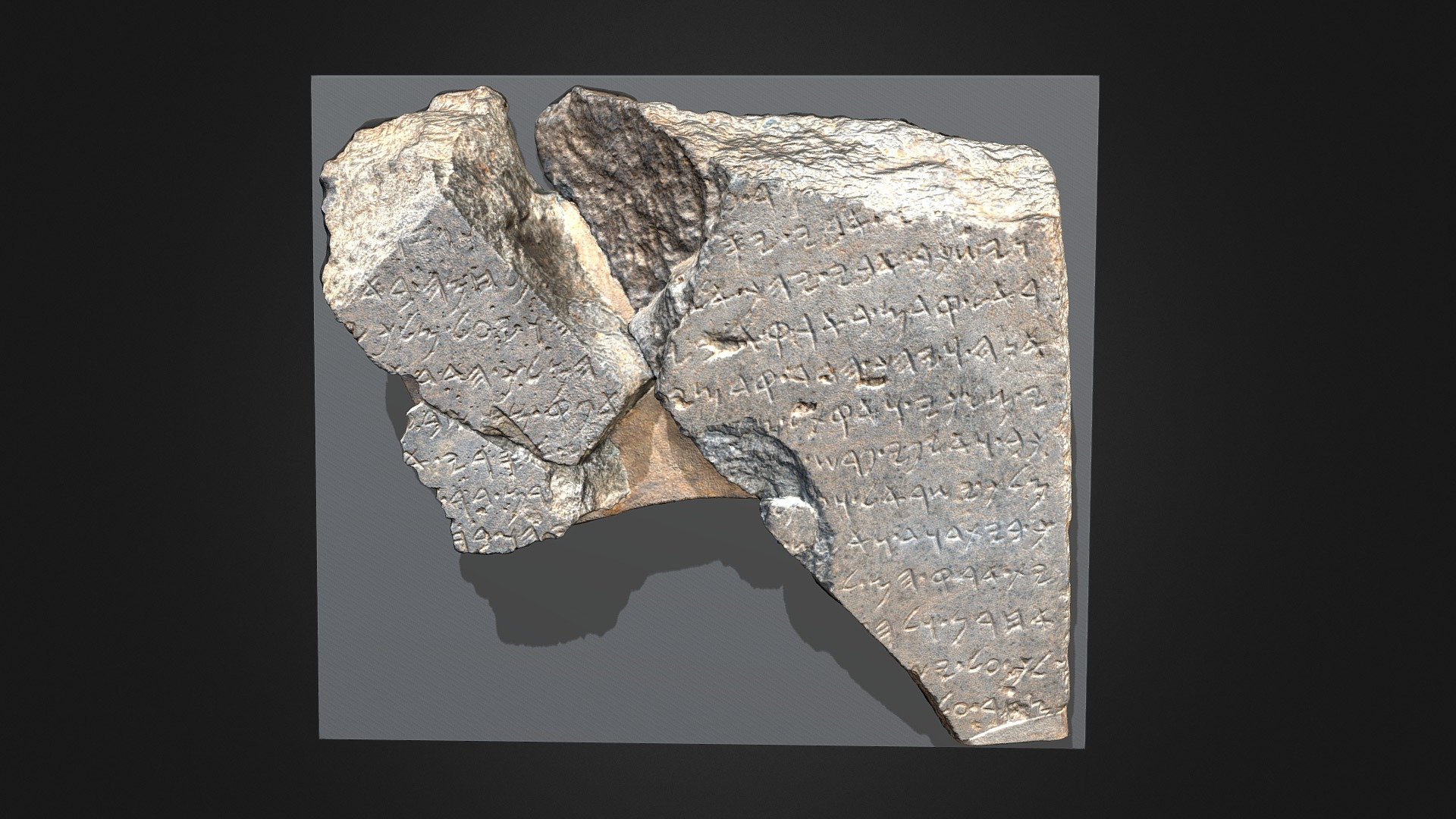
Broken 9th-century BC basalt stele discovered at Tel Dan in 1993–1994 containing an Old Aramaic victory inscription of King Hazael of Aram - Damascus that explicitly references the ' House of David ' (bytdwd) alongside Kings Jehoram of Israel and Ahaziah of Judah .

Mesha Stele (Moabite Stone) 3D & AR
Interactive 3D Epigraphic Inscription • 2 Kings 3:4–27

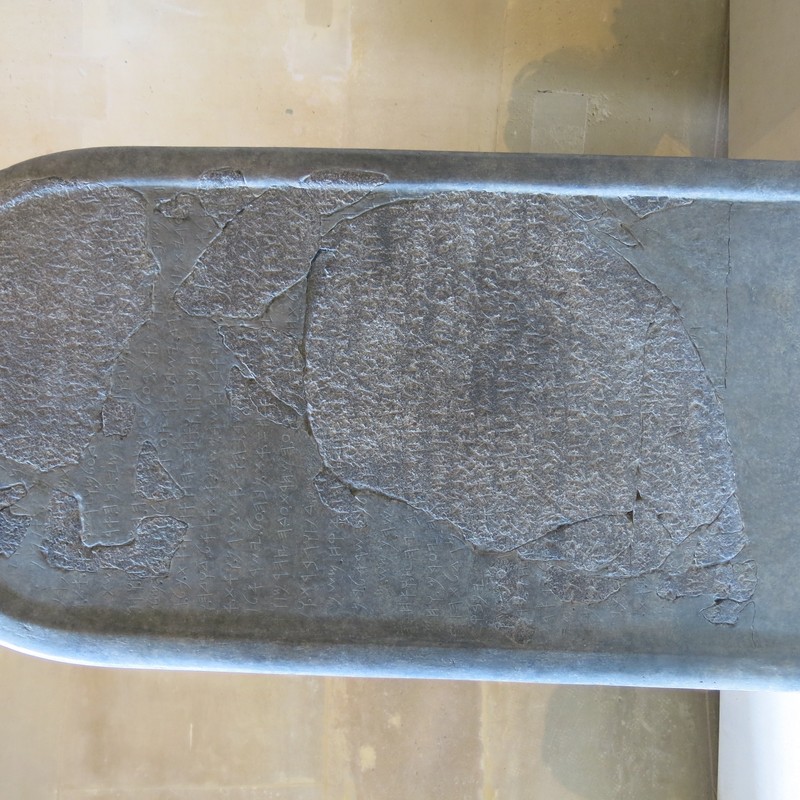
Black basalt victory stele erected by King Mesha of Moab recording his revolt against the House of Omri of Israel and mentioning YHWH and the House of David .

9th-century BC Aramaic victory monument explicitly attesting the Davidic Dynasty ('bytdwd')

Three basalt fragments of an Aramean triumphal inscription erected by King Hazael of Aram - Damascus , boasting of slaying Joram of Israel and Ahaziah of the ' House of David ' (bytdwd).

Merneptah Victory Stele (Israel Stele)
IMAGE • archaeology

Egyptian New Kingdom victory monument of Pharaoh Merneptah recording campaigns in Canaan and early Israel .

Curators & Archaeologists of Egyptian Museum, Cairo • Egyptian Museum, Cairo / Wikimedia Commons Public Domain Mark 1.0
Merneptah Stele (Israel Stele) — Earliest Extra-Biblical Israel Mention
IMAGE • archaeology

Egyptian hieroglyphic victory poem from 1208 BCE preserving the earliest historical inscription naming ' Israel ' as a people in Canaan .

New Kingdom Egyptian Royal Scribes of Pharaoh Merneptah • Egyptian Museum, Cairo CC-BY-SA 4.0
The Exodus & Mount Sinai
Connected via Code of Hammurabi Stele 81% Wiki Topic
Wiki Article • Torah & Covenant

Raised in Pharaoh's court and called at the burning bush on Horeb , Moses and his brother Aaron lead Israel out of bondage in Egypt through the Passover and crossing of the Red Sea to receive the Covenant Law at Mount Sinai.

תּוֹרָה
tora (tôrâ) [toe-RAW]
H8451 Hebrew noun feminine 219x
instruction, teaching, law, guidance

Instruction, direction, teaching, authoritative guidance; God's parental self-revelation instructing His people how to walk in communion; also Pentateuch.

Derivation: From יָרָה (H3384) to cast, point out, instruct.
Mesha Stele Inscription Close-up
IMAGE • archaeology

Mesha Stele ( Moabite Stone ) basalt inscription mentioning King Mesha of Moab , Omri King of Israel , and YHWH.

Curators & Archaeologists of Louvre Museum • Louvre Museum / Wikimedia Commons Public Domain Mark 1.0
Tel Dan Stele — 'House of David' (Bytdwd) Inscription
IMAGE • archaeology

Ninth-century BCE basalt stele fragment discovered in northern Israel preserving the earliest extra-biblical reference to King David 's dynasty (' House of David ').

Aram-Damascus Stonecutters • Israel Museum, Jerusalem / Wikimedia Commons CC-BY-SA 4.0
Mesha Stele (Moabite Stone) — King Mesha of Moab & YHWH
IMAGE • archaeology

Inscribed black basalt slab (c. 840 BCE) recording King Mesha 's rebellion against Israel , mentioning Omri, Chemosh, and the Sacred Name YHWH.

Moabite Royal Scribes • Louvre Museum, Paris (AO 5066) / Wikimedia Commons Public Domain Mark 1.0
Mesha Stele (Moabite Stone)
74% direct_archaeological
9th-century BC royal Moabite monument mentioning Omri King of Israel and the Tetragrammaton (YHWH)

A 1.24-meter black basalt stele inscribed in the Moabite dialect of Northwest Semitic by King Mesha of Moab , recounting his rebellion against Israelite domination and restoring territories captured during the reign of Omri.

Leningrad Codex (B19a) — Deuteronomy 6:4–9 (Shema Yisrael)
IMAGE • manuscripts

The foundational Jewish confession of monotheism with enlarged letters Ayin and Dalet forming 'Witness'.

Samuel ben Jacob (Tiberian Masoretic Scribe, 1008 CE) • National Library of Russia, Saint Petersburg (Firkovich B 19a) Public Domain Mark 1.0
Leningrad Codex (B19a) — Psalm 1 & Psalm 2
IMAGE • manuscripts

Opening folio of the Tehillim ( Psalms ) with poetic layout and accentuation.

Samuel ben Jacob (Tiberian Masoretic Scribe, 1008 CE) • National Library of Russia, Saint Petersburg (Firkovich B 19a) Public Domain Mark 1.0
Leningrad Codex (B19a) — Genesis 1:1–2:3
IMAGE • manuscripts

The oldest complete manuscript of the Hebrew Bible (dated 1008 CE), with full Tiberian Masorah.

Samuel ben Jacob (Tiberian Masoretic Scribe, 1008 CE) • National Library of Russia, Saint Petersburg (Firkovich B 19a) Public Domain Mark 1.0
Leningrad Codex (B19a) — Isaiah 52–53
IMAGE • manuscripts

Masoretic Hebrew text of the Fourth Servant Song with critical masorah parva and magna.

Samuel ben Jacob (Tiberian Masoretic Scribe, 1008 CE) • National Library of Russia, Saint Petersburg (Firkovich B 19a) Public Domain Mark 1.0
Leningrad Codex (B19a) — Exodus 20 (Ten Commandments)
IMAGE • manuscripts

The Decalogue preserved with upper and lower cantillation marks in the Tiberian masoretic tradition.

Samuel ben Jacob (Tiberian Masoretic Scribe, 1008 CE) • National Library of Russia, Saint Petersburg (Firkovich B 19a) Public Domain Mark 1.0
Papyrus 45 (Chester Beatty I) Gospels and Acts
IMAGE • manuscripts

Early 3rd-century papyrus codex folio containing portions of the four Gospels and Acts of the Apostles.

Curators & Archaeologists of Chester Beatty Library, Dublin • Chester Beatty Library, Dublin / Wikimedia Commons Public Domain Mark 1.0
Codex Sinaiticus — Gospel of John 21:7 Folio
IMAGE • manuscripts

Fourth-century uncial manuscript (GA 01) written in Koine Greek on parchment, depicting John 21:7 with Peter leaping into the Sea of Tiberias .

Scribes of Codex Sinaiticus • British Library / Wikimedia Commons Public Domain Mark 1.0
Codex Alexandrinus (A, 02) — Acts of the Apostles 1
IMAGE • manuscripts

Uncial folio depicting Christ 's ascension and the waiting apostles in Jerusalem .

5th-Century Christian Uncial Scribes • British Library, London (MS Royal 1. D. V–VIII) Public Domain Mark 1.0
Aleppo Codex — Deuteronomy 32 (The Song of Moses)
IMAGE • manuscripts

Poetic brickwork layout (stichometry) in the premier authority of the Hebrew Masoretic Bible.

Solomon ben Buya'a & Aaron ben Moses ben Asher (c. 920 CE) • Shrine of the Book, Israel Museum / Ben-Zvi Institute Public Domain Mark 1.0
Codex Washingtonianus (W, 032) — The Freer Logion
IMAGE • manuscripts

Fifth-century Gospels codex in the Smithsonian preserving an expanded post-resurrection dialogue.

4th/5th-Century Byzantine-Alexandrian Scribe • Freer Gallery of Art, Smithsonian Institution, Washington, D.C. Public Domain Mark 1.0
Aleppo Codex — Isaiah 1: Vision of Isaiah Son of Amoz
IMAGE • manuscripts

Prophetic opening folio of Isaiah surviving from the Aleppo Crown before its mid-20th century loss.

Solomon ben Buya'a & Aaron ben Moses ben Asher (c. 920 CE) • Shrine of the Book, Israel Museum / Ben-Zvi Institute Public Domain Mark 1.0
Kurkh Monolith of Shalmaneser III
65% direct_archaeological
Neo-Assyrian cuneiform stele documenting the 853 BC Battle of Qarqar and Ahab the Israelite

A 2.2-meter rounded limestone stele containing an annalistic account of the western campaigns of Shalmaneser III, culminating in the titanic Battle of Qarqar against a twelve-king anti-Assyrian coalition.

Codex Alexandrinus (A, 02) — Revelation 21 (New Jerusalem)
IMAGE • manuscripts

The best surviving early manuscript witness to the text of the Book of Revelation .

5th-Century Christian Uncial Scribes • British Library, London (MS Royal 1. D. V–VIII) Public Domain Mark 1.0
Codex Alexandrinus (A, 02) — Gospel of Luke 1
IMAGE • manuscripts

Fifth-century Greek manuscript representing the Byzantine textual tradition in the Gospels.

5th-Century Christian Uncial Scribes • British Library, London (MS Royal 1. D. V–VIII) Public Domain Mark 1.0
Kurkh Monolith of Shalmaneser III
IMAGE • archaeology

Assyrian royal limestone stele recording the Battle of Qarqar and King Ahab the Israelite fielding 2,000 chariots.

Curators & Archaeologists of British Museum • British Museum / Wikimedia Commons Public Domain Mark 1.0
Kurkh Monoliths — Shalmaneser III Inscription Mentions Ahab
IMAGE • archaeology

Assyrian stele documenting the Battle of Qarqar (853 BCE), listing 'Ahab the Israelite' contributing 2,000 chariots and 10,000 troops.

Neo-Assyrian Scribes of Shalmaneser III • The British Museum, London CC-BY-SA 4.0
Codex Vaticanus (B, 03) — Romans 1:1–17
IMAGE • manuscripts

Paul's thesis of the Gospel: 'The righteous shall live by faith' ( Habakkuk 2:4 quotation).

4th-Century Christian Uncial Scribes • Vatican Apostolic Library (Vat. gr. 1209) Public Domain Mark 1.0
Codex Vaticanus (B, 03) — Gospel of Matthew 1:1–18
IMAGE • manuscripts

Genealogy of Jesus Christ from Abraham through David in prime Alexandrian text-type.

4th-Century Christian Uncial Scribes • Vatican Apostolic Library (Vat. gr. 1209) Public Domain Mark 1.0
📄
PDF • facsimiles

Crown of Aleppo folio preserving the stichometric poetic layout and authentic Ben- Asher vocalization.

Solomon ben Buya'a & Aaron ben Moses ben Asher (c. 920 CE) • Shrine of the Book, Israel Museum / Ben-Zvi Institute Public Domain Mark 1.0

Scripture Passages (0)

Link copied to clipboard
Article Wiki

Title

Open Page → Explore