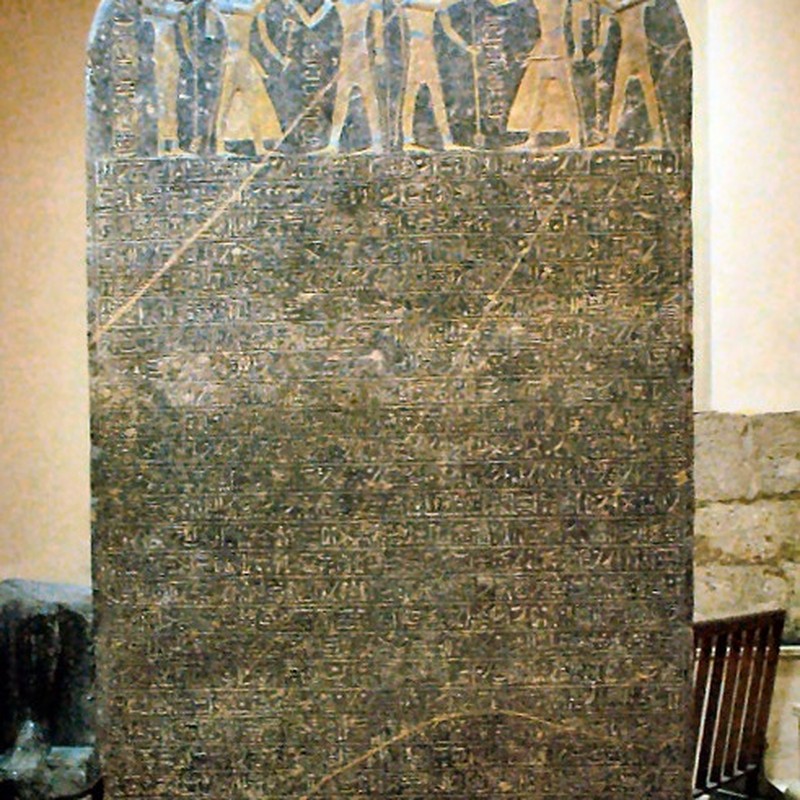
Current Museum / Accession:Egyptian Museum, Cairo (JE 31408)
A 3.18-meter black granite commemorative stela of Pharaoh Merneptah detailing military campaigns in Libya and Canaan, concluding with a poetic victory song that lists conquered peoples including Ashkelon, Gezer, Yanoam, and Israel.
Corroboration Distribution for Connected Passages (7 records)
82% Confidence
7 sources
28.57%
14.29%
28.57%
14.29%
14.29%
Direct Archaeology2(28.57%)
Ancient Historians1(14.29%)
Dead Sea Scrolls & Manuscripts2(28.57%)
Scholarly Consensus1(14.29%)
Debated & Traditional1(14.29%)
Claim-by-Claim Epistemic Verification Breakdown
Rigorous 4-part empirical analysis separating ancient text from bias and consensus
1
Literal Translation / Primary Inscription
Epigraphic Record
Line 27 reads: 'Canaan is plundered with every evil; Ashkelon is taken; Gezer is captured; Yanoam is made non-existent; Israel is laid waste, his seed is not.' Crucially, 'Israel' is written with the determinative for a foreign people/ethnic group rather than a settled city-state or land.
2
Biblical Corroboration & Cross-References
Scriptural Harmony
Corroborates the presence of an identifiable socio-ethnic group named Israel dwelling in Canaan during the Judges period (Joshua–Judges transition) by c. 1208 BC, directly confirming biblical geographical memory.
Scholarly Debate, Historiography & Modern Consensus
Critical Nuance
Scholars debate the exact socio-political structure denoted by the people determinative (pastoral nomadic confederation vs early sedentary tribal league) and whether 'seed' refers to agricultural grain supplies or human progeny.
4
Ancient Author Bias, Royal Propaganda & Perspective
Ideological Context
Typical Egyptian royal triumph hyperbole. Merneptah claims Israel's complete annihilation ('his seed is not'), an ideological boast routinely employed across New Kingdom military triumphal stelae.