Knowledge Graph Scripture & Encyclopedia

Search & Explore

Multimedia Filter:
Suggested topics:
Found 36 topics & entities and 24 verses in 3298ms • Auto-routed to All Matches (Hybrid)
Topic Overview

Babylonian Chronicle Tablet (BM 21946)

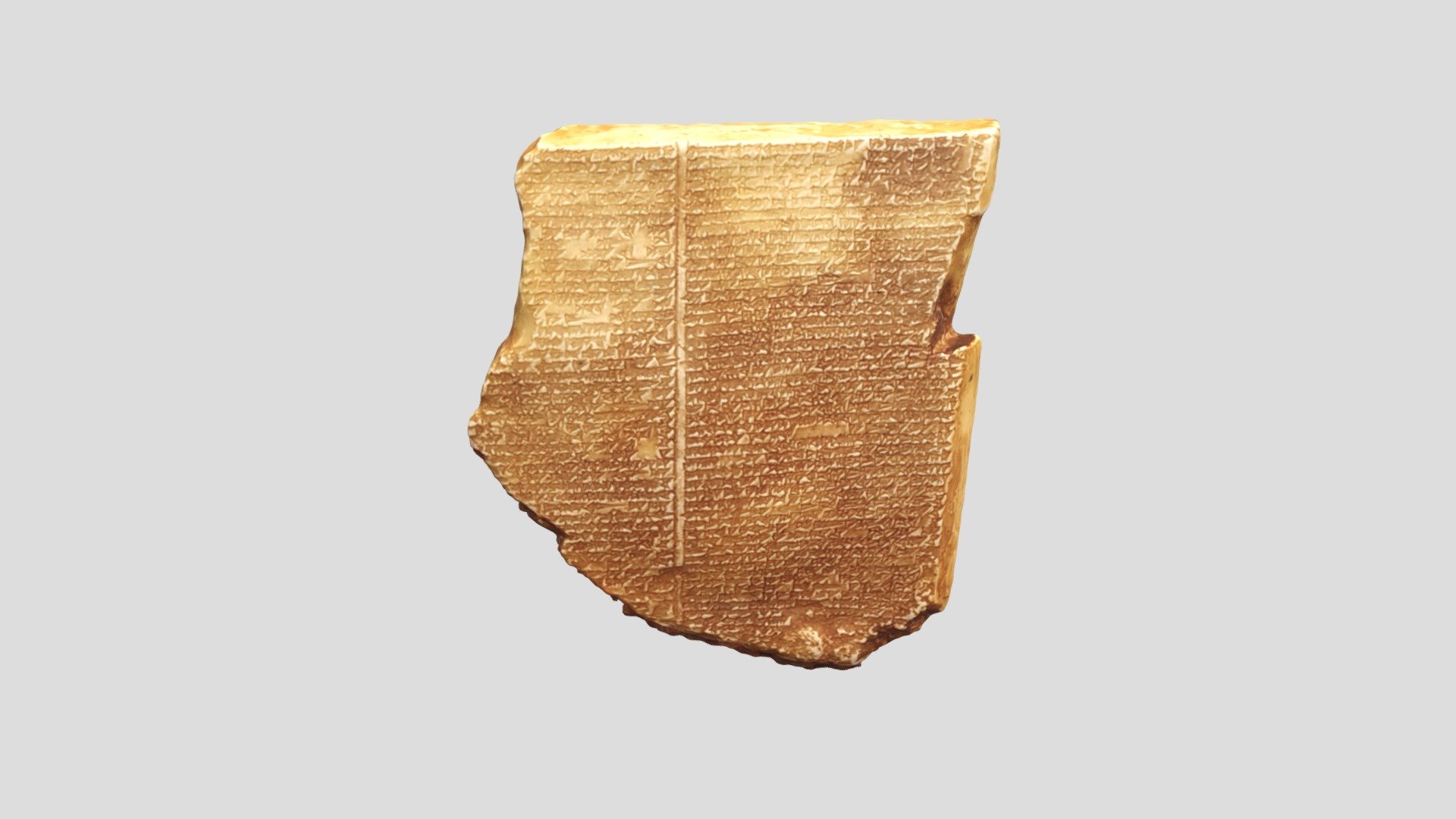
Babylonian Chronicle Tablet ( BM 21946 ) (Interactive 3D Chronicle Tablet • 2 Kings 24:10–17 ): Babylonian royal chronicle tablet documenting King Nebuchadnezzar's capture of Jerusalem , the seizure of King Jehoiachin , and appointment of King Zedekiah in 597 BC. Within the broader Biblical Knowledge Graph, this connects directly to Babylonian Captivity & Post-Exilic Return—In 586 BCE, Nebuchadnezzar of Babylon destroyed Jerusalem and deported Judah , including King Jehoiachin and High Priest Jehozadak ( 1 Chronicles 6:15 ), before the Persian decree of Cyrus enabled Zerubbabel , Joshua , Ezra , and Nehemiah to rebuild the Temple and walls of Jerusalem.

Biblical Geography & Sacred Architecture

3D Sanctuary Reconstructions: Babylonian Chronicle Tablet ( BM 21946 ) — Babylonian royal chronicle tablet documenting King Nebuchadnezzar's capture of Jerusalem , the seizure of King Jehoiachin , and appointment of King Zedekiah in 597 BC. The Flood Tablet ( Gilgamesh Tablet XI ) — Cuneiform clay tablet excavated at Nineveh from the Royal Library of Ashurbanipal and deciphered by George Smith in 1872. Recording the Mesopotamian flood narrative (releasing a dove, swallow, and raven as the ark comes to rest on a mountain), it provides a remarkable ancient Near Eastern comparative witness alongside Genesis 6 –9.

Scripture Witness (KJV) & Canonical Context

Primary KJV scripture witnesses include Isaiah 3:20 : "The bonnets, and the ornaments of the legs, and the headbands, and the tablets, and the earrings,"; Ezekiel 23:17 : "And the Babylonians came to her into the bed of love, and they defiled her with their whoredom, and she was polluted with them, and her mind was alienated from them."; Ezekiel 23:15 : "Girded with girdles upon their loins, exceeding in dyed attire upon their heads, all of them princes to look to, after the manner of the Babylonians of Chaldea , the land of their n...".

Connected Topics & Entities Book/Chapter Verse Person Place Lexicon Theology Commentary History Perspective

Topics, People & Places (36)

Babylonian Chronicle Tablet (BM 21946) 3D & AR
Interactive 3D Chronicle Tablet • 2 Kings 24:10–17

Babylonian royal chronicle tablet documenting King Nebuchadnezzar's capture of Jerusalem , the seizure of King Jehoiachin , and appointment of King Zedekiah in 597 BC.

Neo-Babylonian cuneiform tablet recording Nebuchadnezzar's capture of Jerusalem on 2 Adar (March 15/16, 597 BC)

Part of the series of Neo-Babylonian Chronicles covering years 605–594 BC, providing the exact day-by-day imperial record of Nebuchadnezzar II's siege and capture of Jerusalem .

Babylonian Chronicle BM 21946 Tablet
IMAGE • archaeology

Cuneiform clay tablet detailing King Nebuchadnezzar's capture of Jerusalem and appointment of Zedekiah .

Curators & Archaeologists of British Museum • British Museum / Wikimedia Commons Public Domain Mark 1.0
Neo-Babylonian administrative cuneiform receipts documenting oil rations provided to exiled King Jehoiachin of Judah

Four administrative clay cuneiform tablets discovered in the royal palace complex of Babylon detailing food and oil allowances allocated to royal captives and foreigners during the reign of Nebuchadnezzar II.

Nabonidus Chronicle Tablet
IMAGE • archaeology

Chronicle tablet recording the peaceful surrender of Babylon to Cyrus the Great without battle in 539 BC.

Curators & Archaeologists of British Museum • British Museum / Wikimedia Commons Public Domain Mark 1.0
Cyrus Cylinder
99% direct_archaeological
6th-century BC baked-clay Persian proclamation decreeing the repatriation of exiled peoples and rebuilding of sanctuaries

A barrel-shaped cylinder inscribed in Babylonian cuneiform by Cyrus the Great following his peaceful conquest of Babylon in 539 BC, articulating his imperial policy of religious restoration.

18th-century BC Amorite royal archives documenting nomadic tribal customs and intuitive ecstatic prophecy

Over 25,000 cuneiform tablets from the palace of Zimri -Lim depicting the vibrant West Semitic Amorite world along the Middle Euphrates , preserving names, tribal migrations, covenant slaughter rituals, and prophetic oracles.

Seven-tablet cuneiform epic detailing the elevation of Marduk and creation of the cosmos from watery chaos (Tiamat)

The definitive Babylonian cosmogonic epic consisting of ~1,000 lines across seven tablets, describing a primal conflict between freshwater Apsu and saltwater Tiamat, culminating in Marduk crafting heaven and earth from Tiamat's corpse.

15th-century BC cuneiform archives documenting social customs that illuminate patriarchal family narratives in Genesis

Over 5,000 cuneiform tablets from the Hurrian city of Nuzi detailing adoption contracts, surrogate motherhood arrangements, oral deathbed blessings, and the inheritance of household gods (teraphim).

8th-century BC Neo-Assyrian royal slabs naming Menahem of Samaria, Pekah, and Hoshea King of Israel

Alabaster palace wall slabs recording the military conquests and administrative reorganizations of Tiglath-Pileser III (biblical ' Pul '), who introduced mass deportations across the Levant.

Cyrus Cylinder — Declaration of Persian Return (Ezra 1)
IMAGE • archaeology

Ancient clay cylinder inscribed in Babylonian cuneiform (539 BCE) detailing Cyrus the Great's decree permitting exiled peoples to return to their homelands and rebuild their sanctuaries.

Babylonian Cuneiform Scribes of Cyrus II • British Museum, London (BM 90920) / Wikimedia Commons CC-BY-SA 4.0
7th-century BC Neo-Assyrian state treaty tablets establishing vassal loyalty with extensive covenant curses

Massive cuneiform tablets containing the loyalty oaths imposed by King Esarhaddon upon his western vassals (including Manasseh of Judah ) to guarantee the accession of Ashurbanipal.

Atrahasis Epic Flood Tablet
IMAGE • archaeology

Old Babylonian cuneiform epic preserving the ancient flood narrative and instruction to build an escape vessel.

Curators & Archaeologists of British Museum • British Museum / Wikimedia Commons Public Domain Mark 1.0
Epic of Atrahasis
90% scholarly_consensus
18th-century BC Akkadian epic containing the classic sequence of Creation, human rebellion/noise, and the Great Flood

A three-tablet Akkadian masterpiece written by the scribe Ipiq-Aya, presenting the primeval narrative arc: lower gods rebel against hard labor, humans are created from clay and divine blood, human population explodes, and Enlil sends plagues and a flood.

Wiki Article • History & Monarchy

In 586 BCE, Nebuchadnezzar of Babylon destroyed Jerusalem and deported Judah , including King Jehoiachin and High Priest Jehozadak ( 1 Chronicles 6:15 ), before the Persian decree of Cyrus enabled Zerubbabel , Joshua , Ezra , and Nehemiah to rebuild the Temple and walls of Jerusalem .

Uzziah Tablet — Second Temple Reburial of King Uzziah
IMAGE • archaeology

Aramaic inscription stone from the Mount of Olives reading 'Hither were brought the bones of Uzziah , king of Judah ; do not open!'.

Ancient Near Eastern Scribes and Stonemasons • The British Museum / Israel Antiquities Authority CC-BY-SA 4.0
Jehoiachin's Rations Tablet from Babylon
IMAGE • archaeology

Weidner cuneiform tablet recording royal oil allotments to 'Ya'u-kinu king of the land of Yahudu' and his sons.

Curators & Archaeologists of Vorderasiatisches Museum, Berlin • Vorderasiatisches Museum, Berlin / Wikimedia Commons Public Domain Mark 1.0
The Flood Tablet (Gilgamesh Tablet XI) 3D & AR
Interactive 3D Cuneiform Tablet • Genesis 6–9

Cuneiform clay tablet excavated at Nineveh from the Royal Library of Ashurbanipal and deciphered by George Smith in 1872. Recording the Mesopotamian flood narrative (releasing a dove, swallow, and raven as the ark comes to rest on a mountain), it provides a remarkable ancient Near Eastern comparative witness alongside Genesis 6 –9.

Late 8th-century BC Assyrian royal inscriptions documenting the final fall of Samaria and deportation of Israelites (722 BC)

Octagonal clay prisms and palace relief annals of Sargon II recording the siege, capture, and resettlement of Samaria , ending the northern Kingdom of Israel .

Nabonidus Cylinder of Sippar & Ur
77% direct_archaeological
Cuneiform foundation cylinders of the last king of Babylon explicitly naming Belshazzar his eldest son

Large clay foundation cylinders excavated from temple ruins at Sippar and Ur in which King Nabonidus describes restoring sanctuaries and offers prayers for his eldest son, Crown Prince Belshazzar.

Achaemenid Imperial Edicts in Ezra
77% textual_corroboration
Imperial Persian archival memorandums and decrees preserved in Aramaic in Ezra 1, 6, and 7

The official administrative Aramaic decrees preserved in Ezra 1:2–4 , 6:1–12 (Edict of Cyrus discovered at Ecbatana ), and 7:12–26 (Letter of Artaxerxes to Ezra ), confirming imperial treasury funding for the Second Temple .

Ur III Sumerian Cuneiform Tablet 3D & AR
Interactive 3D Cuneiform Tablet • Genesis 11:28–31

Mesopotamian clay administrative tablet from the Third Dynasty of Ur (c. 2100–2000 BC) recording offerings of barley-fed sheep and goats, illustrating the scribal culture and urban economy of southern Mesopotamia around the patriarchal era of Ur of the Chaldeans ( Genesis 11:28–31 ).

יְהוָה
Yahweh [yah-WEH]
H3068 Hebrew proper name deity 6828x
the LORD, Yahweh

The proper covenant name of the God of Israel, the Tetragrammaton (YHWH), revealing God as the self-existent, eternally active, and covenant-faithful Redeemer ('I AM WHO I AM', Exodus 3:14). BDB: proper name of God of Israel, denoting Him who is continually present to redeem and fulfill His promises.

Derivation: From הָיָה (H1961) to be, exist; lit. 'He who causes to be' or 'He who is'.
מֶלֶךְ
melek (meleḵ) [MEH-lekh]
H4428 Hebrew noun masculine 2530x
king, royal sovereign

King, sovereign ruler; human earthly king under the covenant law (Deuteronomy 17) and supremely Yahweh as cosmic King of kings ruling from Zion.

Derivation: From מָלַךְ (H4427) to reign.
Sennacherib Prism (Taylor Prism)
73% direct_archaeological
Neo-Assyrian hexagonal clay cylinder recording the 701 BC siege of Jerusalem and Hezekiah of Judah

A six-sided fired clay prism recording eight military campaigns of Sennacherib, containing the official Assyrian state perspective on the siege of Judah and Jerusalem in 701 BC.

Monumental funerary inscription of Emperor Augustus documenting nationwide imperial census registrations

The official first-person political autobiography of Caesar Augustus engraved on temple walls across the empire, recording his military conquests, building projects, honors, and imperial censuses.

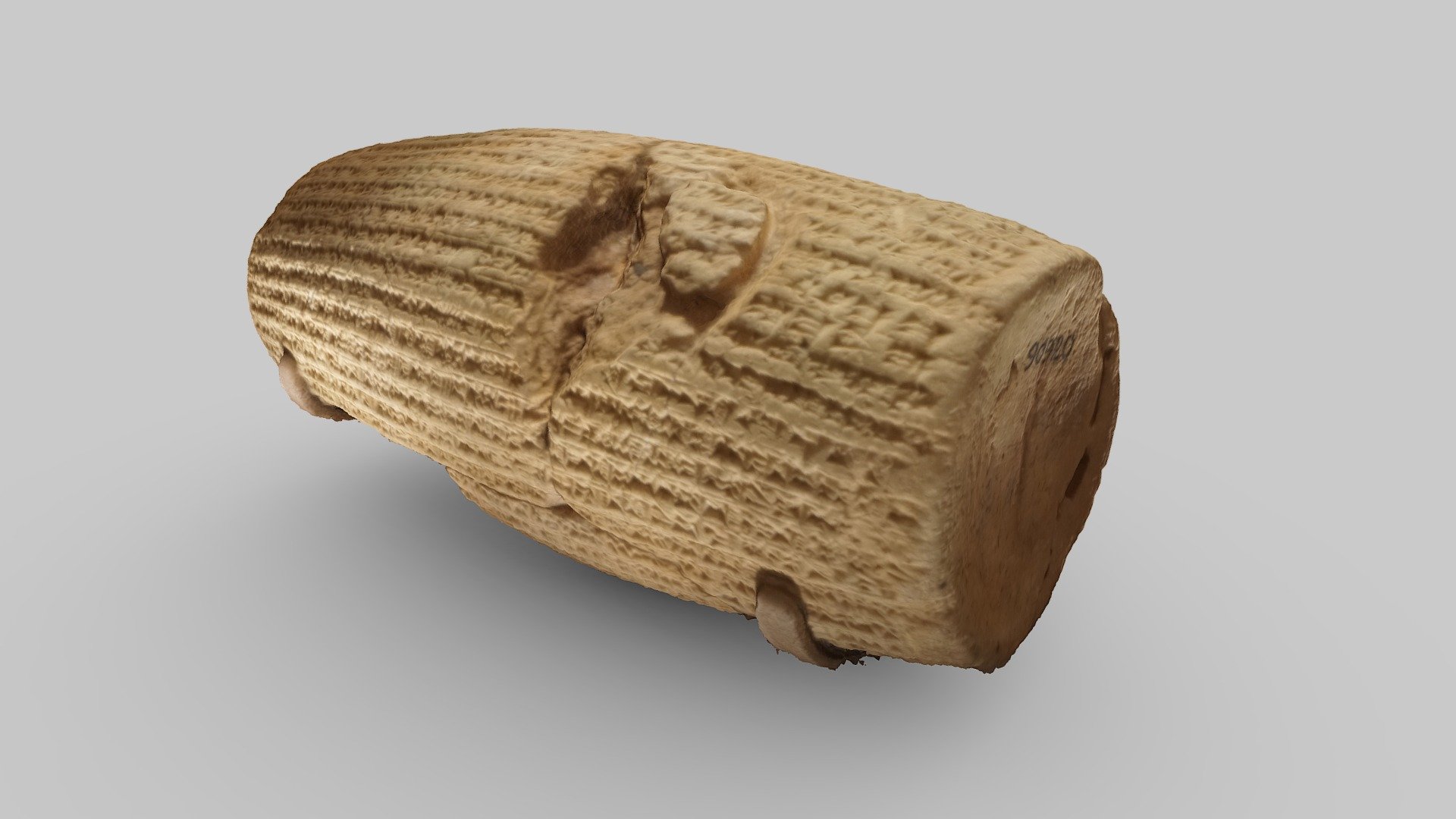
The Cyrus Cylinder 3D & AR
Interactive 3D Cuneiform Artifact • Ezra 1:1–4

Ancient barrel-shaped baked clay cylinder inscribed in Babylonian cuneiform on behalf of King Cyrus the Great after his conquest of Babylon in 539 BC, recording his policy of restoring exiled peoples and sacred temple vessels to their homelands—paralleling the decree in Ezra 1:1–4 and 2 Chronicles 36:22–23 .

Standard Babylonian cuneiform epic from Nineveh preserving the Utnapishtim global deluge account

Tablet XI of the Epic of Gilgamesh, which electrified the Victorian world when George Smith translated Utnapishtim's story of surviving an all-encompassing divine flood in an ark with animals.

Late 2nd-century BC Jewish historiographical account of Antiochus IV Epiphanes, Judas Maccabeus, and the origin of Hanukkah

The authoritative Jewish court chronicle detailing Antiochus IV Epiphanes's desecration of the Jerusalem Temple, the guerrilla uprising led by Mattathias and Judas Maccabeus, the cleansing and rededication of the altar on 25 Kislev 164 BC (Hanukkah), and the rise of the Hasmonean dynasty.

2nd-century BC Hellenistic Jewish history detailing the heroic martyrdom of Eleazar and the seven brothers for resurrection hope

A passionate five-volume historical synthesis abridged by an anonymous epitomist from the lost work of Jason of Cyrene , emphasizing divine providence, temple sanctity, bodily resurrection, and heroic martyrology.

Gustave Doré — Moses Smashing the Tablets of the Law (1866)
IMAGE • artwork

Moses descending Sinai in holy indignation at the sight of the golden calf and shattering the stone tablets.

Gustave Doré / La Grande Bible de Tours • La Grande Bible de Tours (1866) Public Domain Mark 1.0
Monumental Stone Tomb of Cyrus the Great
IMAGE • artwork

Six-tiered limestone plinth and gabled burial chamber of Cyrus II the Great standing at the Achaemenid royal capital of Pasargadae.

Curators & Archaeologists of Pasargadae World Heritage Site, Iran • Pasargadae World Heritage Site, Iran / Wikimedia Commons Public Domain Mark 1.0
Achaemenid Persian Gold Daric with Archer King
IMAGE • archaeology

High-purity gold coin struck under Darius and Xerxes depicting the Great King running with spear and composite bow.

Curators & Archaeologists of Bibliothèque nationale de France • Bibliothèque nationale de France / Wikimedia Commons Public Domain Mark 1.0
Enuma Elish Fourth Tablet (Marduk and Tiamat)
IMAGE • archaeology

Neo-Assyrian cuneiform tablet recounting the god Marduk defeating chaos sea-dragon Tiamat to structure the cosmos.

Curators & Archaeologists of British Museum • British Museum / Wikimedia Commons Public Domain Mark 1.0
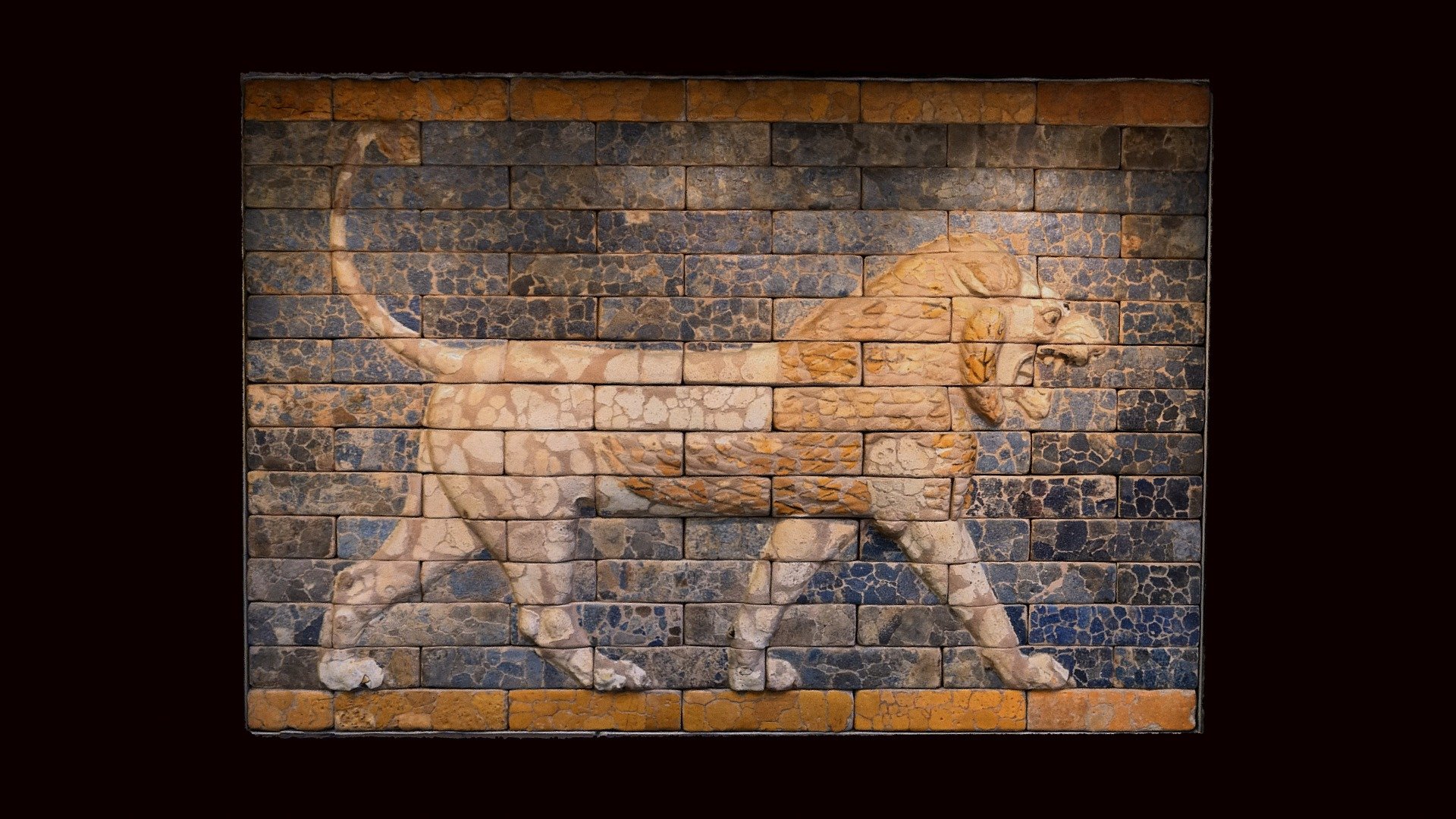
Lion Panel from Nebuchadnezzar II's Throne Room 3D & AR
Interactive 3D Glazed Brick Relief • Daniel 4:30 & Daniel 7:4

Molded polychrome glazed brick relief panel of a striding roaring lion from the facade of King Nebuchadnezzar II's Throne Room and Processional Way in Babylon —symbolizing royal Babylonian power as echoed in Jeremiah 50:17 and Daniel 7:4 .

Library of Ashurbanipal Flood Tablet — Epic of Gilgamesh XI
IMAGE • archaeology

Cuneiform tablet discovered at Nineveh preserving the ancient Mesopotamian account of the catastrophic global deluge and ark.

Ancient Near Eastern Scribes and Stonemasons • The British Museum / Israel Antiquities Authority CC-BY-SA 4.0

Scripture Passages (24)

The bonnets, and the ornaments of the legs, and the headbands, and the tablets, and the earrings,

And the Babylonians came to her into the bed of love, and they defiled her with their whoredom, and she was polluted with them, and her mind was alienated from them.

Girded with girdles upon their loins, exceeding in dyed attire upon their heads, all of them princes to look to, after the manner of the Babylonians of Chaldea , the land of their nativity:

Then wrote Rehum the chancellor, and Shimshai the scribe, and the rest of their companions; the Dinaites, the Apharsathchites, the Tarpelites, the Apharsites, the Archevites, the Babylonians, the Susanchites, the Dehavites, and the Elamites,

The Babylonians, and all the Chaldeans, Pekod , and Shoa , and Koa , and all the Assyrians with them: all of them desirable young men, captains and rulers, great lords and renowned, all of them riding upon horses.

We have therefore brought an oblation for the Lord, what every man hath gotten, of jewels of gold, chains, and bracelets, rings, earrings, and tablets, to make an atonement for our souls before the Lord.

And they came, both men and women, as many as were willing hearted, and brought bracelets, and earrings, and rings, and tablets, all jewels of gold: and every man that offered offered an offering of gold unto the Lord.

And Ahio , Shashak, and Jeremoth,

Hadoram also, and Uzal , and Diklah,

And Ebal, and Abimael, and Sheba ,

Duke Aholibamah, duke Elah, duke Pinon,

Duke Kenaz , duke Teman , duke Mibzar,

Nethaneel the fourth, Raddai the fifth,

Ozem the sixth, David the seventh:

Link copied to clipboard
Article Wiki

Title

Open Page → Explore