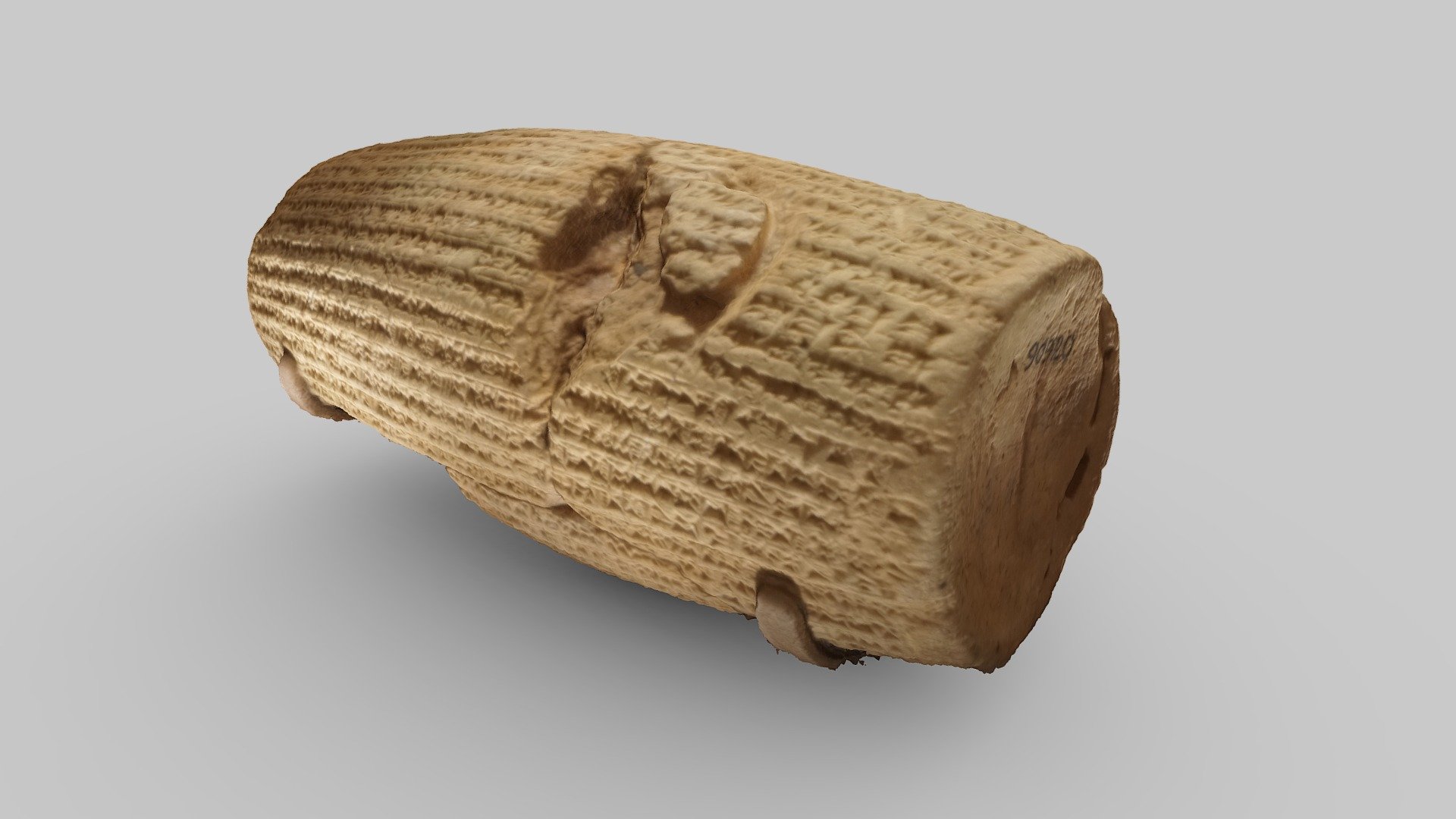
6th-century BC baked-clay Persian proclamation decreeing the repatriation of exiled peoples and rebuilding of sanctuaries
T1Direct Archaeological Attestation96%
539–538 BC
Discovery Excavation:Ruins of Babylon (Esagila temple), Iraq (Hormuzd Rassam, 1879)
Current Museum / Accession:British Museum, London (BM 90920)
A barrel-shaped cylinder inscribed in Babylonian cuneiform by Cyrus the Great following his peaceful conquest of Babylon in 539 BC, articulating his imperial policy of religious restoration.
Corroboration Distribution for Connected Passages (28 records)
91% Confidence
28 sources
53.57%
17.86%
21.43%
Direct Archaeology15(53.57%)
Ancient Historians5(17.86%)
Dead Sea Scrolls & Manuscripts6(21.43%)
Scholarly Consensus2(7.14%)
Debated & Traditional0(0%)
Claim-by-Claim Epistemic Verification Breakdown
Rigorous 4-part empirical analysis separating ancient text from bias and consensus
1
Literal Translation / Primary Inscription
Epigraphic Record
Lines 30–35 state: 'I gathered all their inhabitants and returned them to their habitations. And the gods of the land of Sumer and Akkad... I returned them unharmed to their sanctuaries.'
2
Biblical Corroboration & Cross-References
Scriptural Harmony
Directly corroborates the imperial policy underlying the Edict of Cyrus in Ezra 1:1–4 and 6:3–5, which permitted Jewish exiles to return to Jerusalem and reconstruct the Temple of YHWH.
Scholarly Debate, Historiography & Modern Consensus
Critical Nuance
While the cylinder specifically mentions Mesopotamian cult centers because it was deposited in Babylon, historians (Bickerman, Yamauchi) recognize it as the general philosophical decree reflected regionally in Ezra's Aramaic memorandums.
4
Ancient Author Bias, Royal Propaganda & Perspective
Ideological Context
Cyrus presents himself as the divinely chosen deliverer of Marduk, portraying the deposed Babylonian king Nabonidus as an apostate tyrant to win over local priesthoods.