Knowledge Graph Scripture & Encyclopedia

Search & Explore

Multimedia Filter:
Suggested topics:
Found 36 topics & entities and 24 verses in 2474ms • Auto-routed to All Matches (Hybrid)
Topic Overview

Vespasian Judaea Capta Coin

Vespasian Judaea Capta Coin (Interactive 3D Roman Sestertius • Luke 19:41–44 ): Imperial bronze sestertius struck by Emperor Vespasian commemorating the subjugation of Judaea and the 70 AD fall of Jerusalem , depicting Judaea mourning beneath a date palm. Within the broader Biblical Knowledge Graph, this connects directly to Second Temple Judaism: Sects, Institutions, and Messianic Expectations—Comprehensive historical and archaeological consensus on the political, religious, and social landscape between the return from Babylonian Exile under Cyrus (538 BC) and the Roman destruction of the Second Temple (70 AD).

Church History Lineage & Historical Movements

Tertullian of Carthage (Apostolic & Patristic (30–451 AD)): Quintus Septimius Florens Tertullianus was the founder of Western Latin theological terminology. In works like *Apology*, *Adversus Praxean*, and *De Praescriptione Haereticorum*, he coined the terms 'Trinitas' (Trinity), 'substantia' (substance), and 'persona' (person), while famously asking 'What has Athens to do with Jerusalem ?'.

Connected Genealogical Figures & Lineage

Yeshua the Messiah (Generation 75 • Messianic Line • Child of Mary ): Yeshua the Messiah is a biblical figure in Generation 75 of the Messianic Line , child of Mary . ( Matthew 1:16 ) (mentioned in Matthew 1 , 1 Corinthians 1 , 1 Corinthians 2 )

Biblical Geography & Sacred Architecture

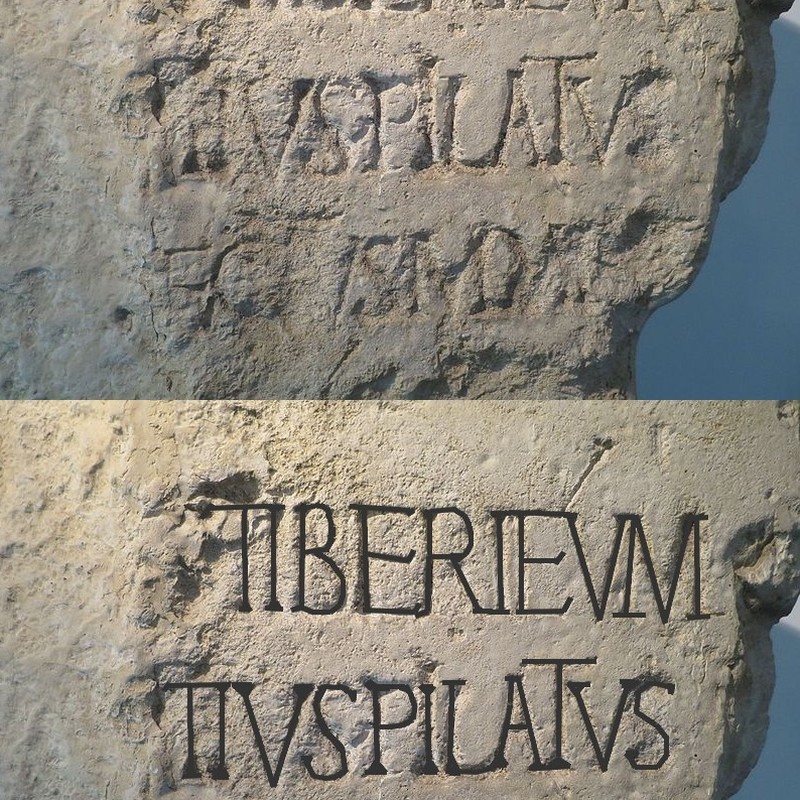
Key geographical locations connected to this topic include Rome (Ancient biblical location referenced in Acts 2:10 , Acts 18:2 , Acts 19:21 , Acts 23:11 , Acts 28:14 , Acts 28:16 .) 3D Sanctuary Reconstructions: Vespasian Judaea Capta Coin — Imperial bronze sestertius struck by Emperor Vespasian commemorating the subjugation of Judaea and the 70 AD fall of Jerusalem , depicting Judaea mourning beneath a date palm. Pilate Stone ( Caesarea Inscription ) — Carved limestone block from Caesarea Maritima bearing a Latin dedicatory inscription naming Pontius Pilatus, Prefect of Judaea.

Scripture Witness (KJV) & Canonical Context

Primary KJV scripture witnesses include John 4:3 : "He left Judaea, and departed again into Galilee ."; Matthew 24:16 : "Then let them which be in Judaea flee into the mountains:"; Matthew 3:1 : "In those days came John the Baptist, preaching in the wilderness of Judaea,". Related canonical books and chapters: Matthew 24 ( Matthew • Chapter 24 (51 verses)), Luke 19 ( Luke • Chapter 19 (48 verses)), Judith 4 ( Judith • Chapter 4 (15 verses)).

Connected Topics & Entities Book/Chapter Verse Person Place Lexicon Theology Commentary History Perspective

Topics, People & Places (36)

Vespasian Judaea Capta Coin 3D & AR
Interactive 3D Roman Sestertius • Luke 19:41–44

Imperial bronze sestertius struck by Emperor Vespasian commemorating the subjugation of Judaea and the 70 AD fall of Jerusalem , depicting Judaea mourning beneath a date palm.

Vespasian 'Judaea Capta' Sestertius
99% direct_archaeological
71 AD commemorative Roman bronze imperial coin celebrating the conquest of Judea and destruction of Jerusalem

A large orichalcum sestertius struck by Emperor Vespasian celebrating the subjugation of the Jewish Revolt, depicting a weeping Jewish woman seated beneath a palm tree guarded by the Emperor or a Roman soldier.

Vespasian Judaea Capta Roman Sestertius
IMAGE • archaeology

Monumental Roman bronze sestertius commemorating the conquest of Jerusalem with weeping Judaea seated under palm tree.

Curators & Archaeologists of British Museum • British Museum / Wikimedia Commons Public Domain Mark 1.0
Herod Agrippa I Coinage and Epigraphy
88% direct_archaeological
1st-century AD royal coinage and epigraphy documenting the reign and sudden demise of King Agrippa I

Bronze coins of Herod Agrippa I minted in Jerusalem featuring a royal canopy (parasol) on the obverse and three ears of barley on the reverse, with royal inscriptions acknowledging him as 'King Agrippa'.

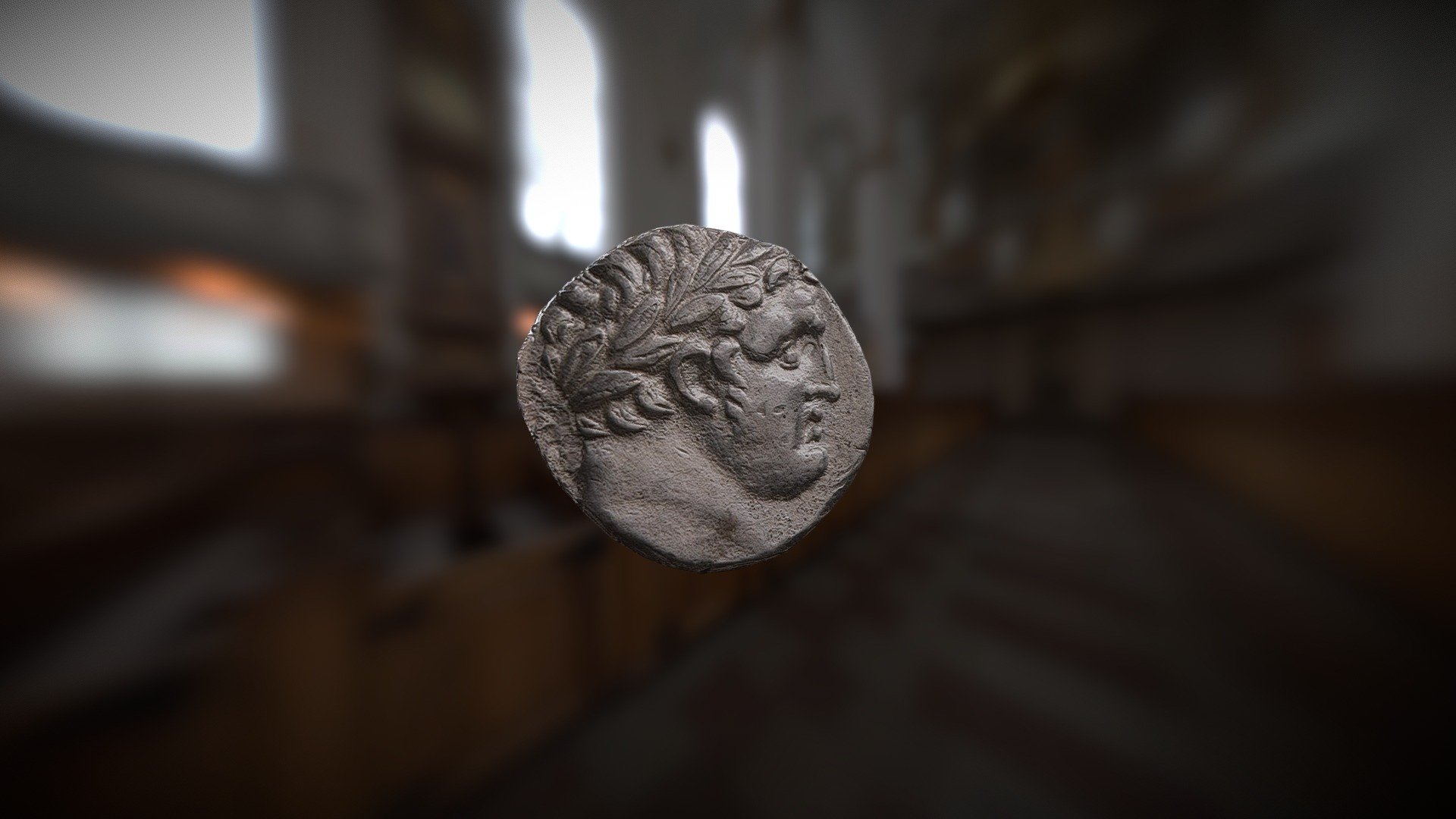
High-purity silver tetradrachm of Tyre required by the Sanhedrin for the annual Temple half-shekel tribute

A heavy silver coin (approx. 14 grams, 94%+ pure silver) bearing the laureate head of Phoenician god Melqart/Herakles on the obverse and an eagle on the reverse, mandated by temple authorities because of its unadulterated silver content.

Tiberius Denarius ('Tribute Penny')
86% direct_archaeological
Silver Roman denarius bearing the laureate portrait and divine titles of Tiberius Caesar: 'Render to Caesar'

The standard silver daily wage coin of the Roman Empire, featuring Emperor Tiberius on the obverse and his mother Livia seated as Pax (holding an olive branch and scepter) on the reverse.

Overstruck rebel silver and bronze coins proclaiming the 'Freedom of Israel' and 'Jerusalem'

Roman provincial coins systematically filed down and overstruck by Simon bar Kokhba's rebel administration with Paleo-Hebrew slogans, depicting the facade of the Temple, Showbread table, trumpets, lulav, and etrog.

Tyrian Silver Shekel (Temple Tax Coin)
IMAGE • archaeology

High-purity silver tetradrachm of Tyre depicting Melqart/Herakles, required for the Jerusalem Temple half-shekel dues.

Curators & Archaeologists of American Numismatic Society • American Numismatic Society / Wikimedia Commons Public Domain Mark 1.0
Yeshua the Messiah
Connected via Vespasian Judaea Capta Coin 80% Messianic Line
Generation 75 • Messianic Line • Child of Mary

Yeshua the Messiah is a biblical figure in Generation 75 of the Messianic Line , child of Mary . ( Matthew 1:16 )

Χριστός
Christos (Christós) [khris-tos']
G5547 Greek proper noun masculine / title 529x
anointing, to be used as ointment, anointed, the Messiah, the Christ

Primary meaning: anointing, to be used as ointment, anointed, the Messiah, the Christ. Strong's: anointed, i.e. the Messiah, an epithet of Jesus. Lexical nuances: as adj. , of things, anointing, to be used as ointment (Æsch., Eur., al.; τ. ἔλαιον τὸ χ. , Le 21:10 ); of persons, anointed ( ὁ ἰερεὺς ὁ χ. , Le 4:5 ; οἱ χ. ἰευρεῖς , II Mac 1:10 ): ὁ χ. τοῦ κυρίου or Θεοῦ ( I Ki 2:10 , Ps 2:2 , al.), of the Messiah (Aram., מְשִׁיחָא ; cf. Dalman, Words , 289 ff.), Lk 2:11 , 26 Jo 1:41 , Ac 2:36 4:26 , al. As subst., ὁ Χριστός , the Messiah, the Christ : Mt 2:...

Derivation: from G5548 (χρίω);
Second Temple Judaism: Sects, Institutions, and Messianic Expectations
Connected via Vespasian Judaea Capta Coin 80% Wiki Topic
From Cyrus to Titus: Pharisees, Sadducees, Herodian Monumentality, and the Roman Matrix

Comprehensive historical and archaeological consensus on the political, religious, and social landscape between the return from Babylonian Exile under Cyrus (538 BC) and the Roman destruction of the Second Temple (70 AD).

The Parousia: The Return of Christ & The Day of the Lord
Connected via Vespasian Judaea Capta Coin 79% Wiki Topic
Prophetic Yom YHWH, The Olivet Discourse, and Apostolic Hope of the Second Coming

Unanimous apostolic proclamation across the New Testament: Christ will return personally, visibly, and gloriously to terminate this present evil age and judge the world in righteousness ( Acts 1:11 , 1 Thess 4:16 , Rev 19:11-16 ). Speculative chronologies and date-setting are designated traditional-conjecture.

Matthew 24:2
Connected via Vespasian Judaea Capta Coin 79% Verse
Matthew Chapter 24, Verse 2

Scripture passage in Matthew 24:2

Rome
Connected via Vespasian Judaea Capta Coin 79% Mapped Place
Biblical Place • 41.900°N, 12.483°E

Ancient biblical location referenced in Acts 2:10 , Acts 18:2 , Acts 19:21 , Acts 23:11 , Acts 28:14 , Acts 28:16 .

Ἰησοῦς
Iesous (Iēsoûs) [ee-ay-sooce']
G2424 Greek proper noun masculine 917x
JESUS, Joshua, Jesus

Primary meaning: JESUS, Joshua, Jesus, Jesus. Strong's: Jesus (i.e. Jehoshua), the name of our Lord and two (three) other Israelites. Lexical nuances: JESUS : Mt 1:21 , al.; ὁ Ἰ , Mt 3:13 , al.; Ἰ. Χριστός , Mt 1:1 , Mk 1:1 , al.; Χρ. Ἰ. , Ro 2:26 , al.; κύριος Ἰ. , Ac 28:31 , al.; Ἰησοῦ , voc., Mk 1:24 , al. Joshua : Ac 7:45 , He 4:8 . Jesus , son of Eliezer: Lk 3:29 . Jesus , surnamed Justus: Col 4:11 . v.s. βαραββᾶς .

Derivation: of Hebrew origin (H03091);
Luke 19:41
Connected via Vespasian Judaea Capta Coin 79% Verse
Luke Chapter 19, Verse 41

Scripture passage in Luke 19:41

Tiny bronze Prutah/Lepton circulating in 1st-century Judea as the smallest unit of temple currency

The smallest denominational bronze coin minted under Hasmonean King Alexander Jannaeus, bearing an eight-rayed star inside a wheel on the obverse and an anchor on the reverse, which remained the everyday pocket change in Gospel times.

Achaemenid Persian Gold Daric with Archer King
IMAGE • archaeology

High-purity gold coin struck under Darius and Xerxes depicting the Great King running with spear and composite bow.

Curators & Archaeologists of Bibliothèque nationale de France • Bibliothèque nationale de France / Wikimedia Commons Public Domain Mark 1.0
Pilate Stone (Caesarea Inscription) 3D & AR
Interactive 3D Epigraphic Slab • Matthew 27:2

Carved limestone block from Caesarea Maritima bearing a Latin dedicatory inscription naming Pontius Pilatus, Prefect of Judaea.

Matthew 24
Connected via Vespasian Judaea Capta Coin 76% Chapter
Matthew • Chapter 24 (51 verses)

And Jesus went out, and departed from the temple: and his disciples came to him for to shew him the buildings of the temple. And Jesus said unto them, See ye not all these things? verily I say unto you, There shall not be left here one stone upon another, that shall not be thrown... Mentions: Yeshua the Messiah, Daniel , Noah .

Silver Half-Shekel (Temple Tax Coin) 3D & AR
Interactive 3D Silver Coin • Exodus 30:13 & Matthew 17:24–27

High-purity silver half-shekel (didrachm) used for the annual Sanctuary tax prescribed in Exodus 30:13–15 for every adult Israelite and referenced in Matthew 17:24–27 when Jesus and Peter paid the two-person Temple tax at Capernaum .

Alexander the Great Silver Tetradrachm
IMAGE • archaeology

Imperial silver tetradrachm showing youthful Alexander as Herakles in lion skin and seated enthroned Zeus Aetophoros.

Curators & Archaeologists of Cabinet des Médailles, Paris • Cabinet des Médailles, Paris / Wikimedia Commons Public Domain Mark 1.0
Luke 19
Connected via Vespasian Judaea Capta Coin 75% Chapter
Luke • Chapter 19 (48 verses)

And Jesus entered and passed through Jericho . And, behold, there was a man named Zacchaeus, which was the chief among the publicans, and he was rich. And he sought to see Jesus who he was; and could not for the press, because he was little of stature. Mentions: Yeshua the Messiah, Abram/Abraham , Jericho , Jerusalem , Bethphage , Bethany 1 .

Herod Antipas Tiberias Bronze Coinage
74% direct_archaeological
1st-century AD bronze coinage minted at Tiberias bearing the title 'Herod the Tetrarch'

Bronze coins minted by Herod Antipas celebrating his new capital city Tiberias on the Sea of Galilee , bearing an upright reed or palm branch on the obverse and a laurel wreath enclosing ' Tiberias ' on the reverse.

Judith 4
72% Chapter
Judith • Chapter 4 (15 verses)

And the children of Israel that lived in Judaea heard all that Holofernes the chief captain of Nebuchadnezzar king of the Assyrians had done to the nations, and after what manner he had spoiled all their temples, and destroyed them utterly. And they were exceedingly afraid before... Mentions: Jacob/Israel , Jerusalem , Samaria , Beth-horon , Jericho , Salem .

Porcius Festus Procurator Prutah
IMAGE • archaeology

Bronze coin struck at Caesarea under Porcius Festus, bearing Nero Caesar's Greek wreath title.

Curators & Archaeologists of Israel Museum • Israel Museum / Wikimedia Commons Public Domain Mark 1.0
69–96 AD Flavian building projects funded by Jerusalem Temple spoils and Domitian's persecution in Revelation

The imperial dynasty founded by General Vespasian and continued by his sons Titus and Domitian, who funded the construction of the Colosseum (Flavian Amphitheater) and Temple of Peace with gold and spoils looted from Jerusalem , culminating in Domitian's enforced imperial cult.

Antiochus IV Epiphanes Seleucid Tetradrachm
IMAGE • archaeology

Seleucid silver coin portraying Antiochus IV as 'Theos Epiphanes' (God Manifest), instigator of the Maccabean Revolt.

Curators & Archaeologists of British Museum • British Museum / Wikimedia Commons Public Domain Mark 1.0
Pontius Pilate Bronze Prutah with Lituus
IMAGE • archaeology

Bronze coin struck in Jerusalem under Pontius Pilate Year 17 of Tiberius featuring the Roman augur's wand.

Curators & Archaeologists of Israel Museum • Israel Museum / Wikimedia Commons Public Domain Mark 1.0
Luke
Connected via Vespasian Judaea Capta Coin 68% New Testament
New Testament • 24 Chapters

Luke (New Testament, 24 chapters). Key figures: Aaron , Jacob/Israel , Joseph , David , Mary , Abram/Abraham . Key places: Galilee , Nazareth , Syria , Bethlehem 1 , Jerusalem , Ituraea . Opens with: "Forasmuch as many have taken in hand to set forth in order a declaration of those things which are most surely believed among us,..."

Herod the Great Bronze Prutah with Tripod
IMAGE • archaeology

Bronze coin struck at Jerusalem under Herod the Great displaying tripod table, incense burner, and Greek title.

Curators & Archaeologists of Israel Museum • Israel Museum / Wikimedia Commons Public Domain Mark 1.0
Matthew
Connected via Vespasian Judaea Capta Coin 67% New Testament
New Testament • 28 Chapters

Matthew (New Testament, 28 chapters). Key figures: Yeshua the Messiah , David , Abram/Abraham , Isaac , Jacob/Israel , Judah . Key places: Aram , Rahab , Babylon , Bethlehem 1 , Jerusalem , Egypt . Opens with: "The book of the generation of Jesus Christ, the son of David , the son of Abraham ...."

Widow's Mite (Alexander Jannaeus Prutah) 3D & AR
Interactive 3D Judean Coin • Mark 12:41–44 & Luke 21:1–4

Small bronze Hasmonean prutah/lepton minted in Jerusalem under King Alexander Jannaeus that remained the smallest denomination bronze coin in daily circulation during the first century AD—universalized in the Gospels as the 'widow's mite' cast into the Temple treasury ( Mark 12:42 ; Luke 21:2 ).

Acts 11
63% Chapter
Acts • Chapter 11 (30 verses)

And the apostles and brethren that were in Judaea heard that the Gentiles had also received the word of God. And when Peter was come up to Jerusalem , they that were of the circumcision contended with him, Saying, Thou wentest in to men uncircumcised, and didst eat with them. Mentions: Simon , Yeshua the Messiah , Saul , Jerusalem , Joppa , Caesarea , Phoenicia , Cyprus .

Pontius Pilate Inscription Stone
IMAGE • archaeology

Limestone dedicatory block from the Caesarea theatre naming Pontius Pilatus, Prefect of Judaea.

Curators & Archaeologists of Israel Museum • Israel Museum / Wikimedia Commons Public Domain Mark 1.0
Father of Latin theology who coined 'Trinitas' and 'una substantia, tres personae'

Quintus Septimius Florens Tertullianus was the founder of Western Latin theological terminology. In works like *Apology*, *Adversus Praxean*, and *De Praescriptione Haereticorum*, he coined the terms 'Trinitas' (Trinity), 'substantia' (substance), and 'persona' (person), while famously asking 'What has Athens to do with Jerusalem ?'.

Scripture Passages (24)

He left Judaea, and departed again into Galilee .

Then let them which be in Judaea flee into the mountains:

In those days came John the Baptist, preaching in the wilderness of Judaea,

And was unknown by face unto the churches of Judaea which were in Christ :

Then after that saith he to his disciples, Let us go into Judaea again.

Then went out to him Jerusalem , and all Judaea, and all the region round about Jordan ,

And this rumour of him went forth throughout all Judaea, and throughout all the region round about.

And they said unto him, In Bethlehem of Judaea: for thus it is written by the prophet,

This is again the second miracle that Jesus did, when he was come out of Judaea into Galilee .

Parthians, and Medes, and Elamites, and the dwellers in Mesopotamia , and in Judaea, and Cappadocia , in Pontus , and Asia ,

And the apostles and brethren that were in Judaea heard that the Gentiles had also received the word of God.

Then the disciples, every man according to his ability, determined to send relief unto the brethren which dwelt in Judaea:

After these things came Jesus and his disciples into the land of Judaea; and there he tarried with them, and baptized.

After these things Jesus walked in Galilee : for he would not walk in Judaea, because the Jews sought to kill him.

But Jesus withdrew himself with his disciples to the sea: and a great multitude from Galilee followed him, and from Judaea,

That word, I say, ye know, which was published throughout all Judaea, and began from Galilee , after the baptism which John preached;

And they were the more fierce, saying, He stirreth up the people, teaching throughout all Judaea, beginning from Galilee to this place.

His brethren therefore said unto him, Depart hence, and go into Judaea, that thy disciples also may see the works that thou doest.

And there followed him great multitudes of people from Galilee , and from Decapolis , and from Jerusalem , and from Judaea, and from beyond Jordan .

And fear came on all that dwelt round about them: and all these sayings were noised abroad throughout all the hill country of Judaea.

And it came to pass, that when Jesus had finished these sayings, he departed from Galilee , and came into the coasts of Judaea beyond Jordan ;

And certain men which came down from Judaea taught the brethren, and said, Except ye be circumcised after the manner of Moses , ye cannot be saved.

Now when Jesus was born in Bethlehem of Judaea in the days of Herod the king, behold, there came wise men from the east to Jerusalem ,

And to pass by you into Macedonia , and to come again out of Macedonia unto you, and of you to be brought on my way toward Judaea.

Link copied to clipboard
Article Wiki

Title

Open Page → Explore