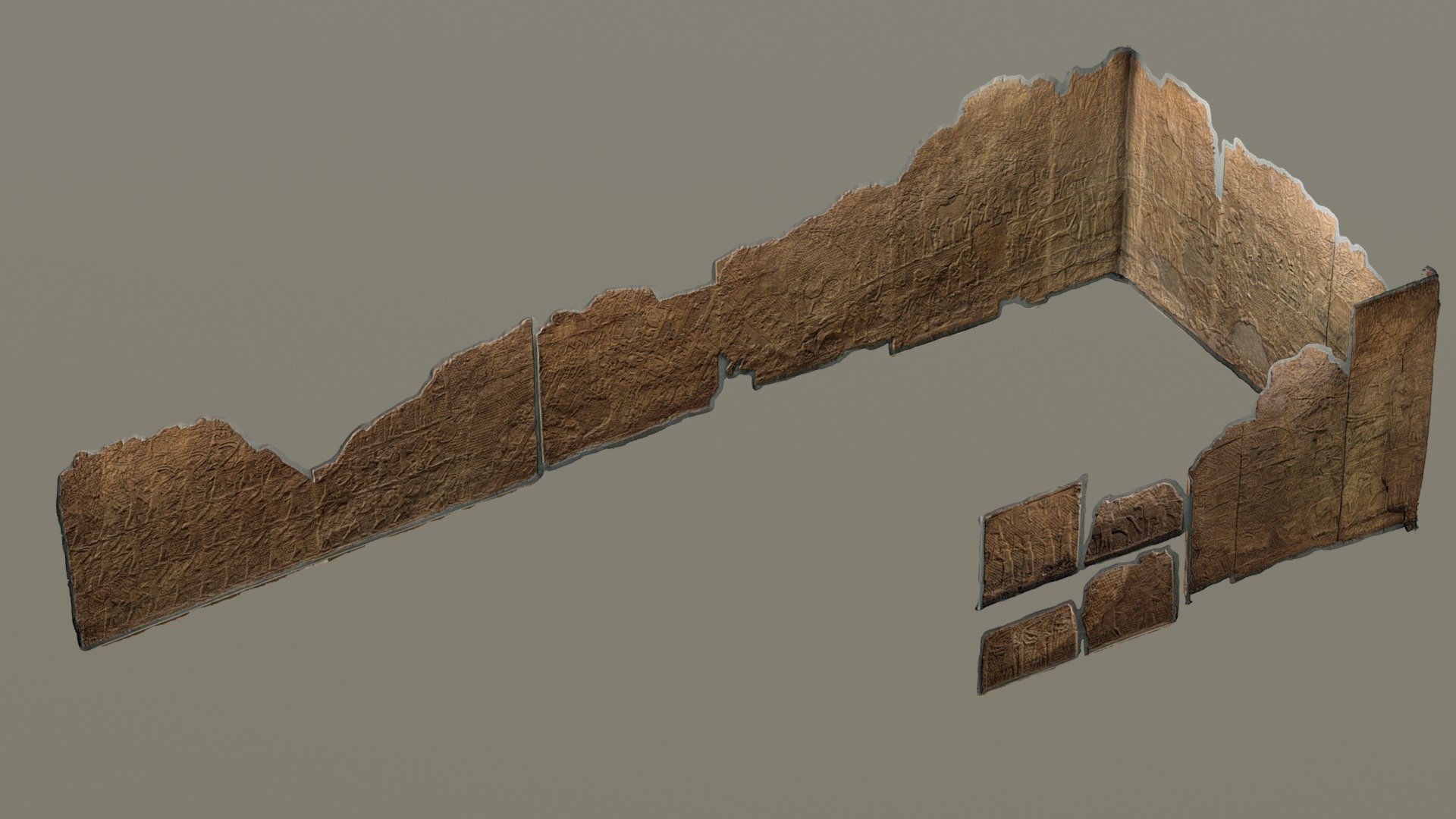
Palace wall relief sculptures from Nineveh illustrating the bloody Assyrian siege and deportation of Lachish in 701 BC
T1Direct Archaeological Attestation96%
c. 700–692 BC
Discovery Excavation:Southwest Palace of Sennacherib, Nineveh, Iraq (Austen Henry Layard, 1849)
Current Museum / Accession:British Museum, London (BM 124904–124915)
A magnificent twelve-slab stone relief frieze that adorned Room XXXVI of Sennacherib's royal palace, providing graphic forensic details of siege ramps, battering rams, impalements, and deportations from Judah's second city.
Corroboration Distribution for Connected Passages (28 records)
92% Confidence
28 sources
64.29%
14.29%
Direct Archaeology18(64.29%)
Ancient Historians3(10.71%)
Dead Sea Scrolls & Manuscripts4(14.29%)
Scholarly Consensus3(10.71%)
Debated & Traditional0(0%)
Claim-by-Claim Epistemic Verification Breakdown
Rigorous 4-part empirical analysis separating ancient text from bias and consensus
1
Literal Translation / Primary Inscription
Epigraphic Record
The epigraph carved above Sennacherib seated upon his throne reads: 'Sennacherib, king of the world, king of Assyria, sat on a throne and watched the spoil of Lachish pass before him.'
2
Biblical Corroboration & Cross-References
Scriptural Harmony
Corroborates 2 Kings 18:14 ('Hezekiah sent to the king of Assyria at Lachish') and 2 Kings 18:17, establishing that Lachish was Sennacherib's primary operational command headquarters in Judah.
Scholarly Debate, Historiography & Modern Consensus
Critical Nuance
Excavations at Tel Lachish (Ussishkin, 1973–1994) revealed the actual stone siege ramp, hundreds of iron arrowheads, scale armor, and mass graves, perfectly matching the artistic depiction on the reliefs.
4
Ancient Author Bias, Royal Propaganda & Perspective
Ideological Context
Because Sennacherib failed to capture Jerusalem, he consecrated the most prestigious banquet hall of his imperial capital to the conquest of Lachish to showcase his military supremacy.