Second Temple JewishRoman Judea & Life of Jesusarchaeological_site
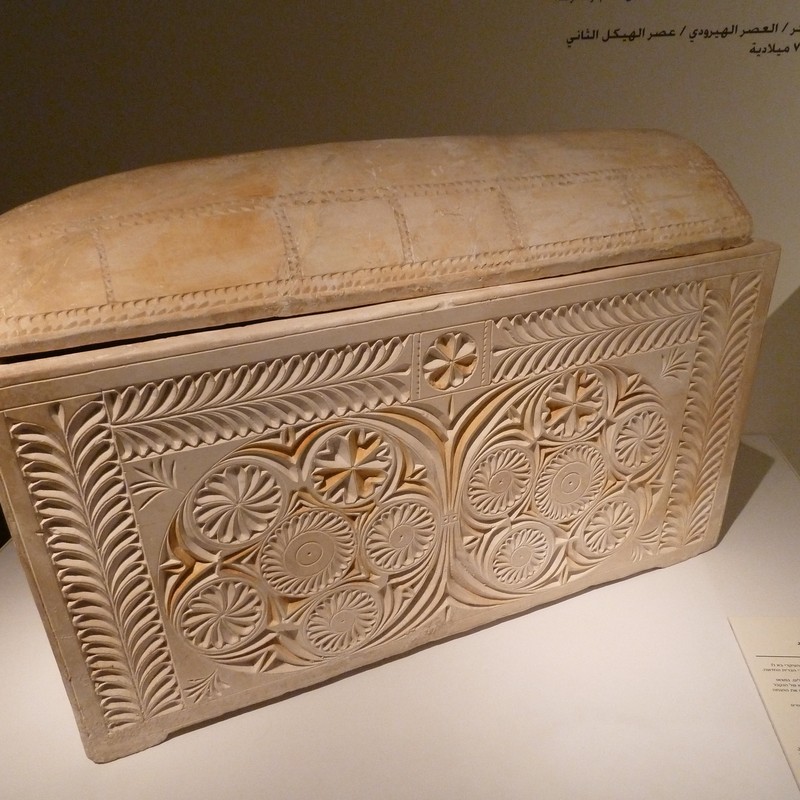
Caiaphas Family Ossuary
1st-century AD ornate limestone burial chest inscribed with the name of High Priest Joseph son of Caiaphas
T1Direct Archaeological Attestation94%
c. 1st c. AD (Burial c. 30–60 AD)
Discovery Excavation:Peace Forest (Abu Tor), South Jerusalem (Zvi Greenhut, 1990)
Current Museum / Accession:Israel Museum, Jerusalem (IAA 1991-468)
A richly decorated limestone ossuary adorned with double rosettes discovered in an undisturbed First Temple burial cave, bearing two Aramaic scratch-inscriptions reading 'Yehosef bar Qayafa' (Joseph son of Caiaphas).
Corroboration Distribution for Connected Passages (56 records)
88% Confidence
56 sources
50%
30.36%
Direct Archaeology28(50%)
Ancient Historians17(30.36%)
Dead Sea Scrolls & Manuscripts6(10.71%)
Scholarly Consensus1(1.79%)
Debated & Traditional4(7.14%)
Claim-by-Claim Epistemic Verification Breakdown
Rigorous 4-part empirical analysis separating ancient text from bias and consensus
1
Literal Translation / Primary Inscription
Epigraphic Record
Inscribed in Jewish cursive Aramaic script on the narrow end and long side: 'Yehosef bar Qayafa' (Joseph, son of Caiaphas). Contained the bones of six individuals, including a male who died around age 60.
2
Biblical Corroboration & Cross-References
Scriptural Harmony
Corroborates the New Testament High Priest Caiaphas who orchestrated the trial and condemnation of Jesus (`MAT.26:3, 57`, `JHN.11:49–50`, `JHN.18:13–14`, `ACT.4:6`), matching Josephus's naming of 'Joseph who was called Caiaphas of the high priesthood'.
Scholarly Debate, Historiography & Modern Consensus
Critical Nuance
Scholars universally recognize the authentic 1st-century archaeological provenance; debate centers on whether it held the High Priest himself or an immediate male family elder of the Caiaphas clan.
4
Ancient Author Bias, Royal Propaganda & Perspective
Ideological Context
Private family burial ossuary reflecting traditional Jewish Second Temple ossilegium (secondary bone collection) practices with zero apologetic or polemical motive.